
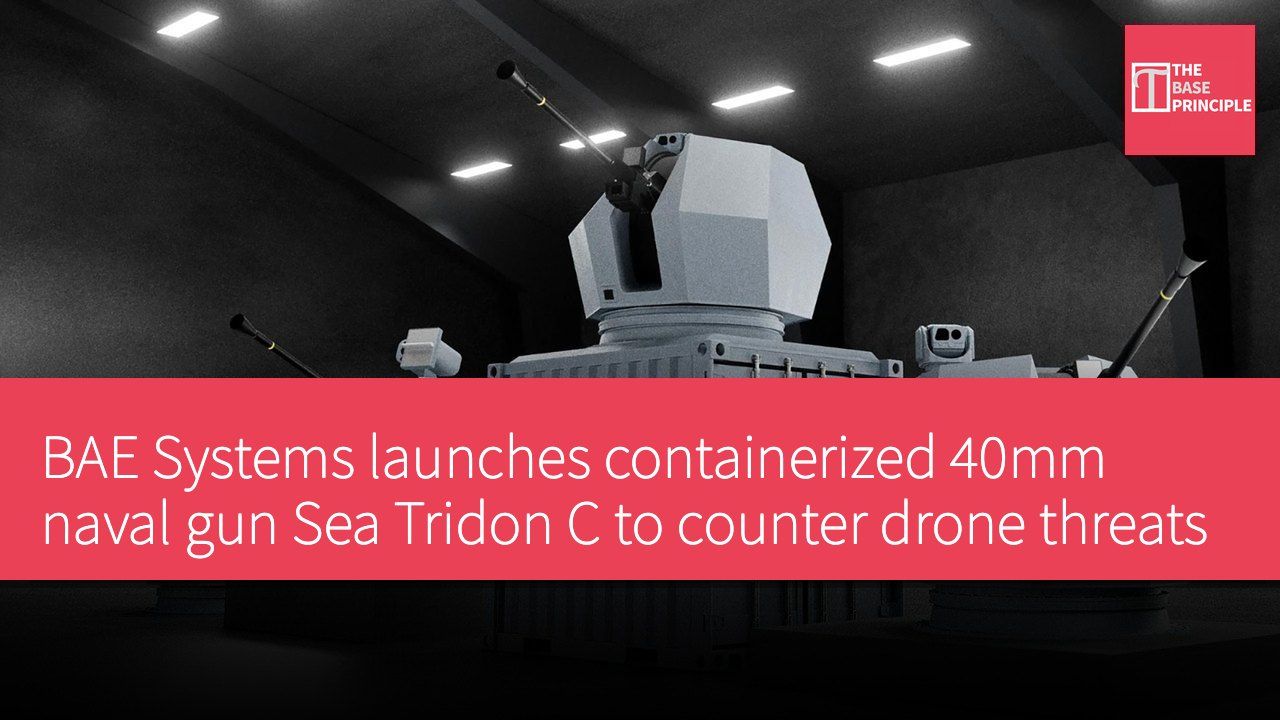
- BAE Systems launches Sea Tridon C 40mm naval gun to counter drone threats.
- The gun can engage aerial, surface, and shore targets, featuring multiple fuse modes.
- BAE Systems emphasizes that the modular design enhances consistency in training and logistics.
- Merchant vessels have become targets in high-risk shipping lanes, increasing the demand for modular artillery.
BAE Systems introduced the Sea Tridon C, a containerized 40mm naval gun, at the Euronaval 2026 defense exhibition in Paris. The company stated that this gun is primarily aimed at military, government, and commercial vessels that require protection for short-term or specific missions. According to the UK Defence Journal, the Sea Tridon C is equipped with a Bofors 40mm gun and an electro-optical fire control system, capable of tracking targets using optical sensors and integrating them within a single container.
Images provided by BAE Systems show the gun mounted on a container stack of a merchant vessel. The gun uses 3P ammunition, which can be programmed by operators before firing and features six fuse modes. The fuse is the component in the shell that initiates the explosion. The company stated that these shells can be used to engage aerial, surface, and shore targets. According to the same UK Defence Journal report, the Sea Tridon C is one of four BAE 40mm systems that share the same ammunition.
Features and Characteristics of Sea Tridon C
The other three systems are Sea Tridon, Sea Trinity, and Bofors 40 Mk4. Sea Tridon is the maritime version of the company's Tridon concept. Sea Trinity adds built-in radar fire control, transforming it into a close-range weapon system designed to counter missile and drone attacks. The Bofors 40 Mk4 is designed for integration with ship combat systems. Lena Gillström, president of BAE Systems Bofors, stated that there is a growing demand in the market for flexible and effective protection solutions.
BAE emphasizes that this modular approach also ensures consistency in training, logistics, and support. The Mk4 is not a new product; Shephard Media describes it as a compact and lightweight anti-aircraft and anti-ship gun. According to Ocean News, the navies of the Netherlands and Belgium are purchasing eight of these guns, while the UK ordered 10 for its Type 31 frigates in 2020, as reported by the UK Defence Journal at that time.
Legal and Market Challenges of Armed Merchant Vessels
The complexity of armed merchant vessels Maritime Executive reported that BAE and another defense contractor, Aselsan, are promoting self-contained deck guns at the exhibition. The report noted that Aselsan's version is called Gokdeniz, featuring a dual 35mm turret and a container support system. The media pointed out that merchant vessels typically do not carry weapons during peacetime, and the installation of artillery on board may raise questions from customs officials in foreign ports, leading to legal issues for crew members and ship owners.
Maritime Executive noted that several contractors see a business opportunity in the scenario where merchant vessels have become targets for attacks like warships in high-risk shipping lanes such as the Strait of Hormuz. Its headline indicated that modular artillery could reduce the risk of drone attacks on shipping.
Currently, there are no reports regarding the price, customers, or delivery dates for the Sea Tridon C, nor any test results. Statements about the targets the gun can engage come solely from BAE, and related reports do not contain independent testing data. The legal issues surrounding armed merchant vessels remain unresolved. The next point of interest will be whether any shipowners or navies will purchase the Sea Tridon C.
Navy Defense Needs Amid Drone Threats
As drone technology advances, merchant vessels face increasing threats in high-risk waters. BAE Systems' Sea Tridon C aims to provide flexible protective solutions, particularly in commercial shipping, where this modular artillery can be rapidly deployed to respond to sudden attacks. Despite growing market demand, the legal issues surrounding armed merchant vessels still need to be addressed, which may affect their widespread adoption. As global security dynamics shift, the defense needs of merchant vessels will become a significant trend in the future defense market.