
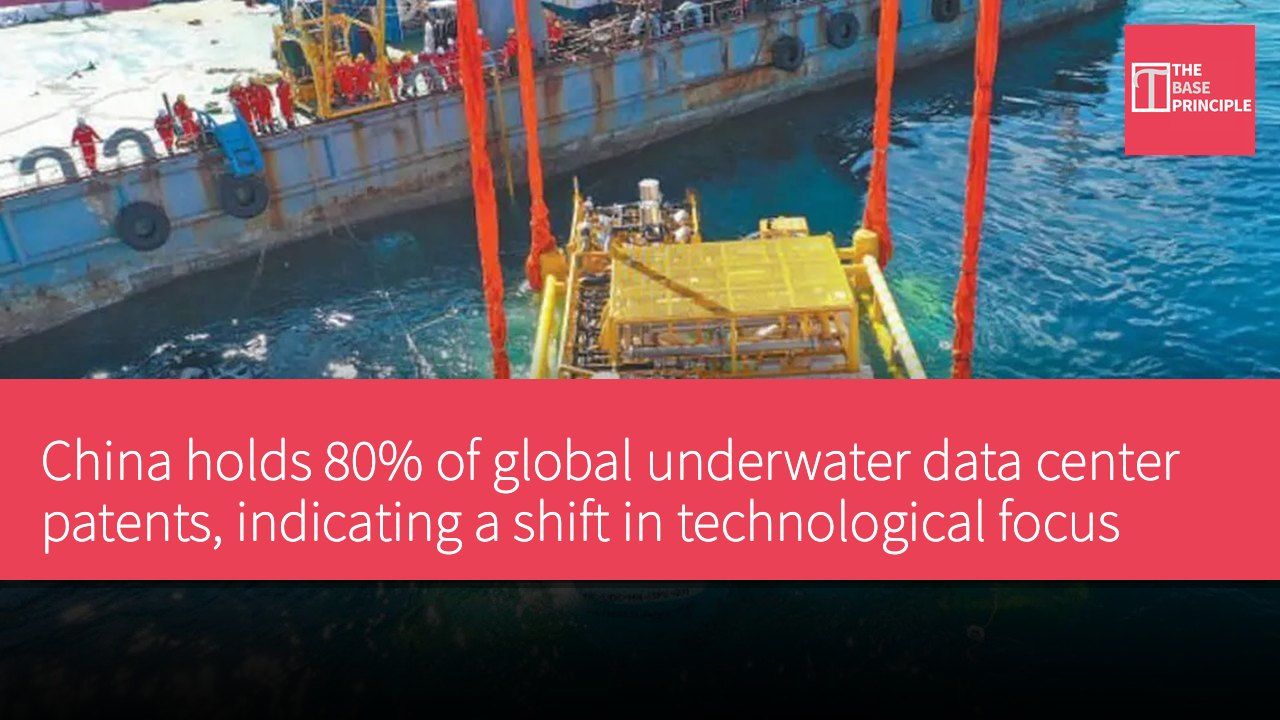
- China holds about 80% of global underwater data center patents, demonstrating its proactive patent application efforts.
- The focus of patents has shifted from early pressure protection to cooling and long-term reliability.
- Chinese patents particularly emphasize the actual construction and maintenance of underwater data centers.
- Underwater data centers can utilize seawater for cooling, reducing the need for mechanical cooling equipment.
A new study shows that China holds approximately 80% of the world's underwater data center patents. While this does not mean that China possesses most of the technology used in these facilities, it reveals the country's active patent applications in this area. The study's findings come from an analysis conducted by two Chinese researchers of 168 patents submitted between 2006 and 2026. The results indicate a significant shift in technological focus during this period. Before 2014, researchers from the United States, Norway, and Canada dominated patent applications related to underwater enclosed spaces and pressure protection.
Around the period from 2015 to 2020, the focus shifted to cooling, power supply, and long-term reliability. Since 2021, Chinese researchers have become the primary source of patents, particularly focusing on modular construction and maintenance.
Shift in Patent Focus
The research also found that China dominates in patents, with South Korea holding about 17, while the remainder is distributed among the United States and Europe. Chinese patents particularly focus on the actual construction, installation, connection, and large-scale maintenance of underwater data centers. This indicates that China is shifting its emphasis toward more practical elements rather than merely proving experimental technologies. This is intriguing, but why is it attracting such significant attention? Data centers generate a substantial amount of heat during operation, due to thousands of computer processors converting electrical energy into thermal energy. Typically, this heat is managed through a combination of fans, chillers, cooling towers, and liquid cooling systems to regulate temperature.
However, this is quite expensive in terms of hardware and additional power costs. If these centers could be placed underwater, they could take advantage of the ocean's virtually limitless supply of cooling seawater.
Clearly, hardware cannot be directly immersed in the ocean, so it needs to be placed in sealed, pressure-resistant containers. These containers are then lowered and secured to the seabed, connecting to power and data cables onshore. Once in place, the heat generated by the servers can be transferred to the cold seawater through specially designed internal cooling systems. In this way, seawater acts as a massive heat sink, potentially eliminating the need for many mechanical cooling devices on land. This does not reduce the power consumption of the computers themselves, but it can decrease the energy spent on keeping them cool.
China's Leading Position and Challenges
China is in a leading position regarding underwater data centers, and this is not merely theoretical technology. Notably, Microsoft deployed an underwater data center named Project Natick off the coast of Scotland in 2018. The project operated for about two years, yielding very encouraging results. According to Microsoft, the failure rate of the underwater data center was only one-eighth that of similar land-based setups. However, despite this, Microsoft chose not to commercialize the technology and confirmed in 2024 that the project had been terminated.
So, is the 80% patent figure worth noting for other countries? The answer is both yes and no. Clearly, China has established a certain lead in patenting in this field, but the engineering challenges of deploying these technologies in practice are significant. The shift toward modularization may reflect China's ambition to commercialize the technology. However, it is worth noting that patents are often regional. Holding a large number of patents in a specific field does not automatically grant a country global control over that technology.
Item Specification Number of Patents 168 Proportion of Patents Held by China About 80% Number of Patents Held by South Korea About 17
China's Patent Advantages and Challenges in Underwater Data Centers
China's dominance in underwater data center patents demonstrates its proactive approach to technological innovation, particularly in modular construction and maintenance. However, the number of patents does not guarantee commercial success of the technology. Despite progress in patent applications, actual deployment of these technologies still faces engineering challenges. While the cooling advantages of underwater data centers are significant, overcoming the limitations of hardware immersion in the ocean and ensuring the sustainability of the technology will be key to future development.