
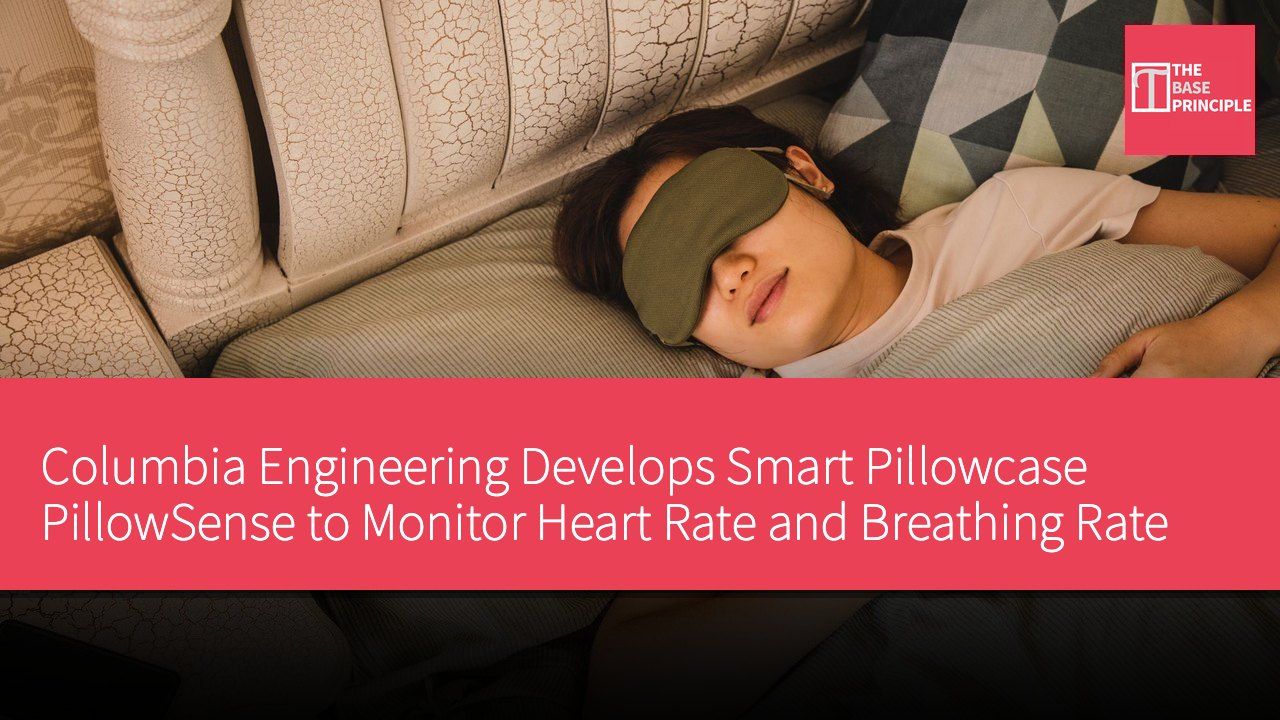
- PillowSense uses fabric sensors to monitor sleep position, heart rate, and breathing rate.
- The device's heart rate and breathing rate data are derived from electrocardiograms.
- PillowSense achieved an 88% accuracy rate in sleep position classification during home testing.
- Currently operating offline, with future goals for mobile-based processing.
A team from Columbia University's Department of Engineering has developed a prototype pillowcase called PillowSense, which uses fabric sensors to estimate sleep position, heart rate, and breathing rate, with data sourced from the sleeper's neck. According to the university's release and a paper published in the Association for Computing Machinery (ACM) journal, most sleep trackers are worn on the body, such as on the wrist or finger. The authors of the paper noted that some individuals find such devices uncomfortable, and existing wearable technology cannot report sleep position. Columbia University stated that sleep position can affect breathing and comfort, and changes in sleep position indicate behaviors that cannot be captured by vital signs alone.
The pillowcase contains conductive fabric that acts as electrodes, while electronic devices measure the tiny voltage differences generated when the sensors contact the neck. The system can separate two types of signals: electrocardiograms (ECG), which record the electrical activity of the heart, and surface electromyography (sEMG), which records muscle activity. The paper notes that heart rate and breathing rate are derived from the electrocardiograms.
Technical Principles of PillowSense
PillowSense achieved an 88% F1 score in classifying seven sleep positions during home testing over 151 nights. The F1 score combines the classifier's precision in naming positions with the number of true cases it captures. The seven positions include supine, prone, left side, right side, and curled up on the left side, right side, or back. The paper indicates that 21 healthy adults participated in the testing, with an average age of 23.7 years, and the model was tested on untrained data.
According to pulse oximeters approved by the U.S. Food and Drug Administration, the average deviation in heart rate readings during home testing was 2.7 beats per minute, while the deviation in breathing readings was 3.1 breaths. Fabric sensors have previously read heart signals in smart shirts developed at Rice University. Xia Zhou, an associate professor of computer science at Columbia Engineering, stated that posture provides a "physical context" for these vital signs.
The paper notes that 88% of the data excluded 71.2 hours of matched data, accounting for about 7.8%: of which 3.8% was due to poor sensor contact, and 4% was due to the sleeper not lying on the pillow. Detection of bent legs was more challenging, with an F1 score of 80%, while upper body posture achieved 91%. For participants with hair on their necks, the heart rate error was larger, at 3.0 and 2.6 beats per minute, while the reference pulse oximeter reported its own error as 3 beats per minute.
Future Development Directions
Currently, analysis is still operating offline, so mobile-based processing remains a future goal. PillowSense is currently only a research prototype and not a diagnostic tool. Clinical use will require comparison with clinical reference measurements and involve larger, more diverse populations, including the elderly and individuals with sleep disorders. Early smart sleepwear, such as the smart pajamas from the University of Massachusetts Amherst, can also sense heart rate and breathing rate. The authors of the paper are preparing a study involving patients in sleep laboratories and plan to improve sensor contact and handling of hair.
The research has been published in the ACM journal on wearable and mobile computing.
Potential Impact and Challenges of PillowSense
The development of PillowSense marks a significant advancement in smart sleep monitoring technology, particularly with its non-wearable design that enhances user comfort. By monitoring sleep position and vital signs, the device can provide a more comprehensive analysis of sleep quality. However, further research and testing are still needed, especially regarding applications in clinical settings, and technical challenges such as poor sensor contact must be addressed. As smart wearable technology evolves, effective integration of further data processing into PillowSense could help improve sleep health management.