
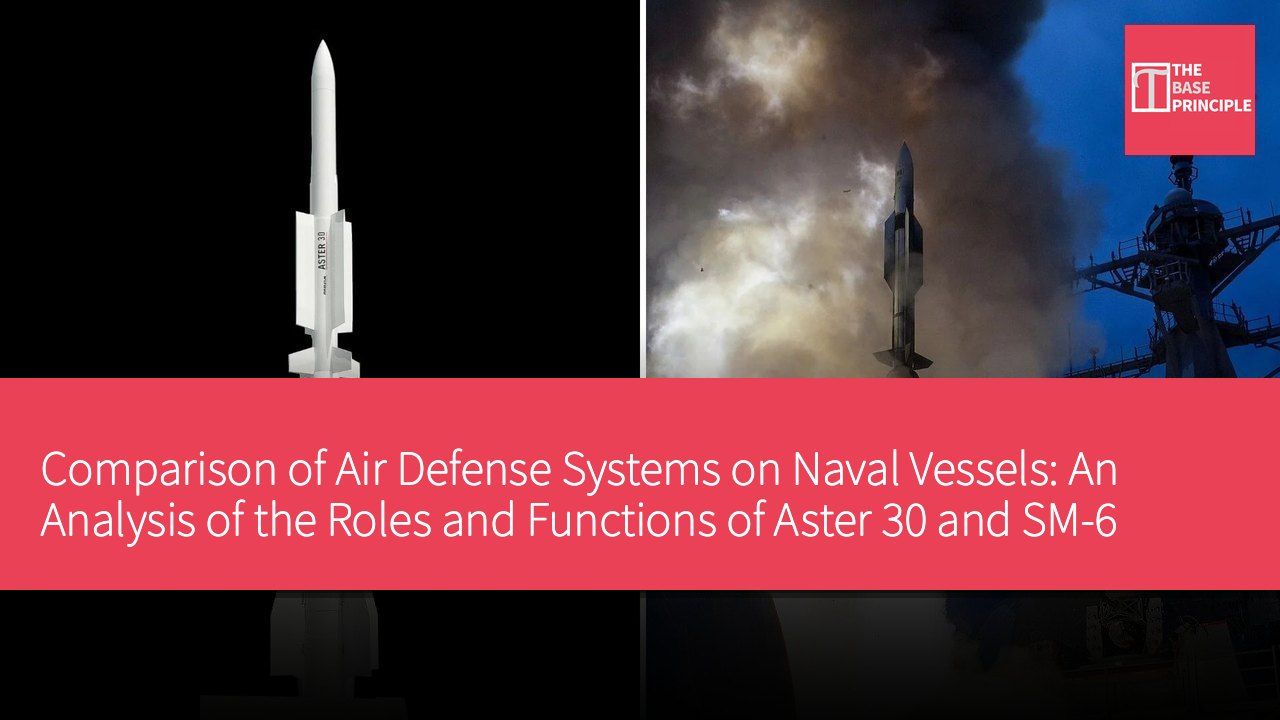
- Aster 30 and SM-6 are both designed to protect naval fleets from aerial threats.
- In addition to intercepting aircraft and cruise missiles, SM-6 can also be used for ballistic missile defense.
- Aster 30 focuses on intercepting aerial threats, while SM-6 can engage surface targets.
- The variants and systems of the missiles influence the Navy's deployment capabilities and defense strategies.
The air defense systems on destroyers protect not only themselves but also nearby vessels from aircraft and incoming cruise missiles. This is the shared mission of Europe’s Aster 30 and the U.S. Navy’s Standard Missile-6, aimed at safeguarding fleets at sea. Aster 30 is a collaborative effort among France, Italy, and the United Kingdom, and is currently in service on the UK’s Type 45 destroyers. The U.S. Navy deploys SM-6 on Aegis warships, utilizing it for a broader range of missions.
The distinction between the two lies in their intended interception targets and their positioning within naval defense systems.
Missile Design and Functionality
Both missiles provide what the Navy refers to as area air defense. Vessels equipped with such systems can help protect a group of ships, including those with limited air defense capabilities. Aster 30 and SM-6 are designed to intercept threats such as aircraft and cruise missiles. SM-6 also plays a role in terminal ballistic missile defense, intercepting ballistic missiles during their final flight phase. Certain variants of Aster 30 also possess ballistic missile defense capabilities, so the comparison depends on the specific variants being discussed.
The most apparent difference lies at sea level. The U.S. Navy also uses SM-6 to engage surface targets, including ships. In contrast, Aster 30’s development has focused on intercepting aerial threats. Regarding integration into the defense systems of warships, the UK’s Type 45 destroyers have three names describing three different components. Sea Viper is the air defense system, Aster 30 is the interceptor, and Sylver is the launcher that carries and fires the missiles. The U.S. equivalent system combines the Aegis combat system, SM-6 missiles, and the Mk 41 vertical launch system.
The ship's radar helps detect and track threats, while the launchers store the missiles in independent cells below deck.
Potential Impacts of Missile Integration
This distinction is particularly important as navies seek to carry different missiles. In 2026, the UK commissioned MBDA to study whether Aster 30 could be launched from the U.S.-made Mk 41 launcher. On the UK’s Type 45 destroyers, Aster 30 is still launched from Sylver. If the study proves integration feasible, it would provide another launcher design consideration for the UK's future warships. Regarding the evolution of the two missile series, the name Aster 30 encompasses several variants. The B1 and B1NT variants reflect Europe’s push to expand capabilities in ballistic missile defense, covering both land and sea.
France and Italy are enhancing their ballistic missile defense capabilities through the land-based SAMP/T NG system, while the UK is upgrading its naval defense through Sea Viper Evolution.
The capabilities that the Navy can deploy depend on the missile variants and the systems used. SM-6 has evolved through a series of block upgrades. Block I and Block IA are part of the existing series, while the U.S. Navy is developing Block IB to extend interception ranges. The historical context of the program helps explain how the two missiles share objectives while still serving different roles. Europe’s Aster 30 upgrades focus on expanding the range of aerial and ballistic threats the interceptor can handle, while SM-6 has evolved from a fleet air defense weapon to a missile that can be used for ballistic missile defense and anti-ship attacks.
Differences in Roles and Developments of Aster 30 and SM-6
Aster 30 and SM-6 represent different strategies in naval air defense systems between Europe and the United States. Aster 30 focuses on intercepting aerial threats, emphasizing the need for air defense, while SM-6 extends to surface attacks and ballistic missile defense, showcasing its versatility. As technology advances, the evolution and integration of both will impact the defensive capabilities of future vessels, particularly in cooperative operations and defense strategies. The UK’s research into the integration of Aster 30 with the U.S. Mk 41 launcher could change the design and operational modes of future warships.