
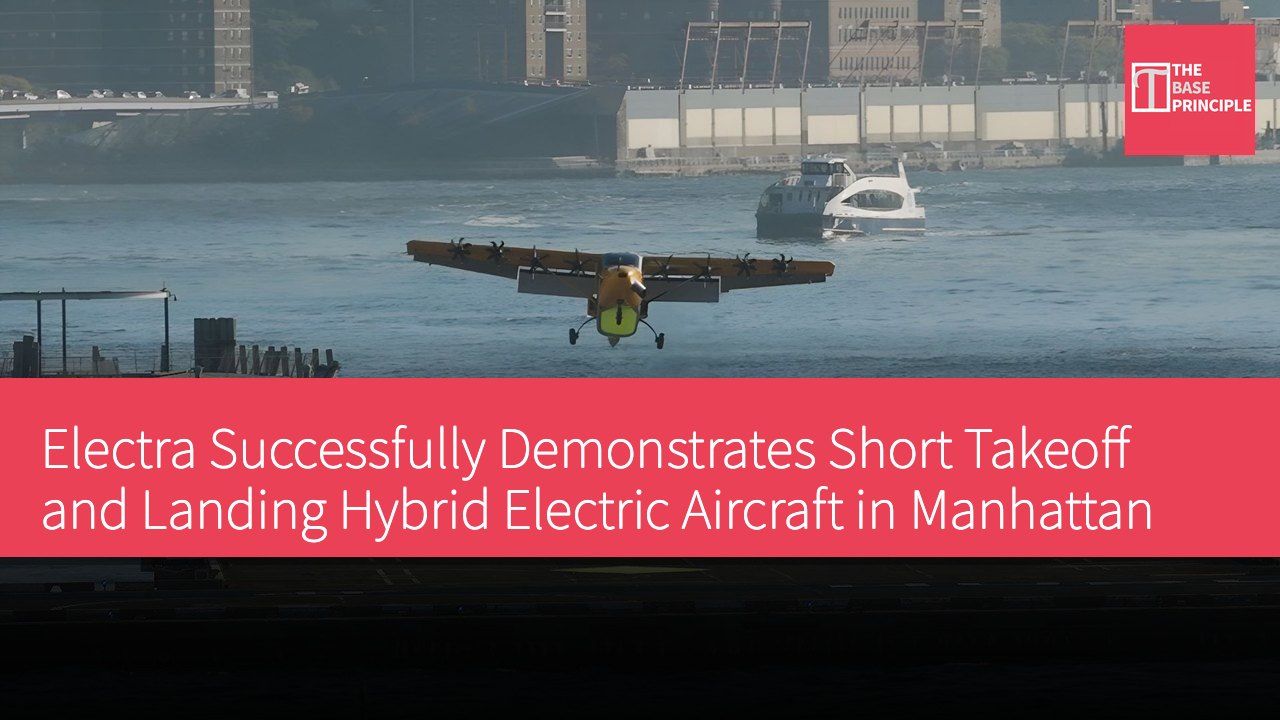
- Electra successfully demonstrated the short takeoff and landing capabilities of its hybrid electric aircraft in Manhattan.
- The aircraft can take off and land within approximately 150 feet, expanding the reachable locations for air travel.
- Electra's plan aims to reduce reliance on major airports, connecting closer destinations.
- Over 60 airlines plan to operate regional direct air routes, indicating market potential.
Electra showcased a method for bringing fixed-wing air travel into urban spaces where traditional aircraft cannot operate. Its hybrid electric demonstrator recently took off and landed at Downtown Skyport in Lower Manhattan, marking the first operation at the helipad by an aircraft without vertical takeoff capabilities. This flight demonstrated a potential new role for compact airfields in the U.S. Electra hopes to leverage existing infrastructure to establish shorter regional routes without the need for traditional airport runways.
Electra's ultra-short-haul aircraft combines hybrid electric propulsion with blown lift technology, allowing it to operate over very short distances. The system directs airflow over the wings at low speeds to generate additional lift, helping the aircraft take off and land within approximately 150 feet. This capability can expand the number of locations suitable for regional air travel. Helipads, small venues, and other compact sites can serve as access points without the need for new runways.
Applications of Short Takeoff and Landing Technology
This demonstration also advanced Electra's broader direct air concept. The approach aims to connect passengers to destinations closer to their departure points, reducing reliance on major airports and congested ground traffic. According to Electra's market outlook, travelers could save approximately three hours and forty-five minutes on journeys between New York City and Boston. The company estimates that time savings for Washington, D.C. would be about three hours and thirty minutes, while Philadelphia would see savings of around forty-five minutes. These figures represent projected travel time savings rather than actual results from the Manhattan demonstration.
Electra has tested its EL2 technology demonstrator at several locations, including downtown Charleston, Bader Field in Atlantic City, and Snowshoe Mountain Resort. Each demonstration explored how short takeoff and landing performance could open unconventional access points. The company has also participated in the Federal Aviation Administration's Advanced Air Mobility Integration Pilot Program, showcasing helicopter-style instrument flight procedures at Roanoke-Blacksburg Regional Airport.
Future Air Network Plans
Electra stated that over 60 airlines plan to operate on regional direct air routes. Its partners also include airport authorities, air service providers, and developers interested in establishing new urban and residential access points. Electra's CEO Marc Allen noted that the flight in Manhattan demonstrated how operators could expand air access without building additional runways. He added that existing sites in the country could support a more decentralized regional transportation network.
Short takeoff and landing capabilities could also play a role beyond passenger transport. Electra indicated that military operators could utilize compact landing areas to transport personnel and supplies when traditional runways are unavailable, damaged, or too hazardous. The aircraft's hybrid electric system and short-distance operational requirements may offer flexibility for logistics missions. However, the Manhattan demonstration alone does not establish the aircraft's operational readiness for commercial or military services. Electra plans to conduct further demonstrations to advance its larger EL9 aircraft toward certification, production, and service.
The company's long-term goal is to connect smaller airfields into a regional network to complement existing airports. Whether this network can be realized will depend on aircraft certification, operational economics, and the availability of suitable sites.
Impact of Short Takeoff and Landing Technology on the Aviation Industry
Electra's short takeoff and landing technology demonstrates new possibilities for utilizing air travel in urban environments. This could not only reduce reliance on traditional airports but also enhance the accessibility of air services under existing infrastructure. With over 60 airlines planning to participate, the commercial potential of this technology is particularly significant. In the future, successfully connecting more small airfields could transform travel patterns, especially in busy urban areas, offering passengers more flexible transportation options.