
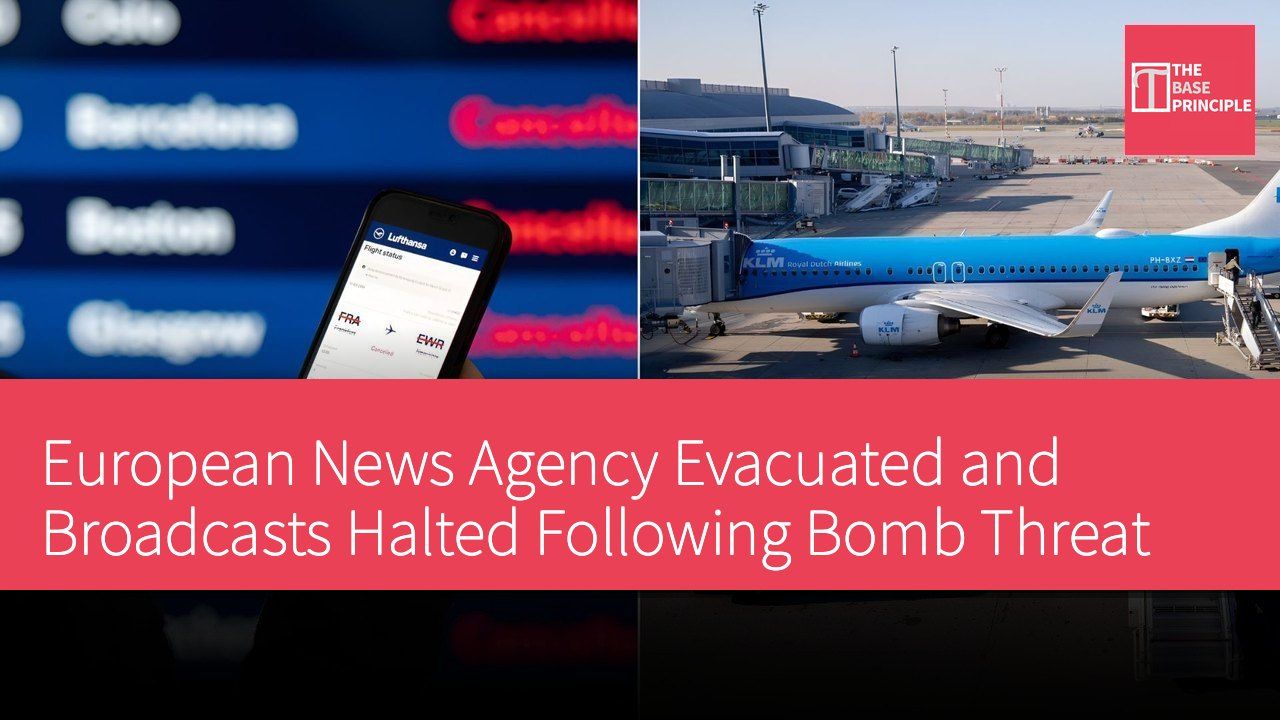
- The European news agency received a bomb threat, resulting in evacuations and broadcast suspensions across Europe.
- No explosives have been found at any affected locations, and the source of the threat is still under investigation.
- The threat may be linked to recent disruptions in aviation.
- Aviation security experts noted that these threats disrupt the normal operation of critical infrastructure.
A European news agency received a serious bomb threat on Friday, warning that "the clock is ticking," leading to evacuations and broadcast suspensions across Europe. The threats indicated an imminent explosion and claimed responsibility for a larger operation targeting passenger airlines throughout Europe. Ireland's national broadcaster RTÉ evacuated its offices after receiving a warning email stating that an explosive device would detonate within 45 minutes. Bulgaria's Nova TV also received similar information, while the UK's Sky reported a security threat.
So far, no explosives have been found at any affected locations. Investigators have not determined whether the threat to the newsroom is connected to the increasing number of aviation disruptions.
Content of the Email Threat
The email threat of an imminent explosion occurred in a message received by RTÉ and Nova TV with the subject line "Information to the West." The email was signed by someone claiming to be Mikhail Andropov, who stated he leads a group related to recent aviation threats. One email warned that an explosive device had been placed inside a broadcasting agency's building and gave authorities only 45 minutes to respond to the alleged detonation. "But this is just the beginning. The events of this week are only a small part of what will soon come to Europe."
The sender wrote. RTÉ suspended programming and evacuated its offices, while security teams began investigations. Some broadcasts were replaced with music and pre-recorded announcements for up to three hours. Police inspected the Nova TV newsroom in Sofia and declared the building safe, allowing employees to return to work, and the broadcaster resumed its normal programming. Sky also confirmed it received a security threat; however, authorities have not disclosed whether the warning contained similar language or was from the same sender.
Impact on Aviation Security
The threat to the newsroom came just days after bomb threats targeting European aviation. The first wave of significant threats emerged on Tuesday, affecting at least seven flights and a cruise ship. The threats led to emergency landings, flight diversions, and fighter jet escorts in Poland, Bulgaria, Italy, and Spain. By Thursday, another wave of threats affected at least 27 flights. On Friday, disruptions occurred again across the continent. Václav Havel Airport in Prague reported nine threatened flights, including services connecting Denmark, Spain, and the UK. France also reported at least four flights under threat.
A Ryanair service from Lisbon to Rome also encountered an alert. In Friday's incidents, at least three aircraft were escorted by Hungarian fighter jets. All affected planes landed safely, and no explosives were found on the threatened aircraft.
Investigators have not yet identified the person responsible for the newsroom email or confirmed whether all threats share a common source. They are examining this information alongside the broader wave of aviation disruptions. These events have highlighted how anonymous bomb threats can disrupt critical infrastructure without any confirmed explosives. Each alert forces security teams to investigate potential dangers before normal operations can resume. Aviation security expert Eric Schouten told Reuters that airline security departments initially assess incoming threats through established procedures.
Subsequently, they notify authorities, who can order flight diversions or deploy fighter jets when necessary. Recent cyberattacks targeting supermarket refrigeration systems have also heightened security concerns across Europe. Investigators have not established any connection between these incidents and the bomb threats. Although no explosives have been found on the affected aircraft or broadcasting facilities, the sender warned that this is just the beginning, presenting European authorities with the possibility of further disruptions.
Relevance and Impact of Recent Aviation Threats
Recent bomb threats against Europe have not only affected news agencies but have also had significant implications for the aviation industry. These threats reveal how anonymous bomb threats can disrupt the operations of critical infrastructure in the absence of actual explosives. As aviation security experts emphasize the assessment procedures for threats, these events may lead to stricter security measures and inspections, further impacting the normal operation of air travel. Investigators are still working to determine the source of the threats and seek potential connections, reflecting the current vulnerabilities in Europe's security environment.