
- Global power grids are gradually achieving gigawatt-hours of electricity storage.
- The Masdar Abu Dhabi project will provide renewable power around the clock.
- BYD has signed a storage contract with Saudi Electricity Company, enhancing total cooperation.
- These projects showcase the expansion of battery storage and its engineering challenges.
Power grids around the world are gradually achieving gigawatt-hours of electricity storage. From solar development projects in Abu Dhabi to battery installations in Saudi Arabia, these initiatives aim to store electricity for use when needed. The following list includes individual facilities, multi-site plans, and phased developments, with capacities reflecting their announced ranges. Some projects are already operational, while others are still under development. The case of Mosden illustrates the need to distinguish historical capacity from the current power supply capability of facilities.
Overview of the Masdar Project
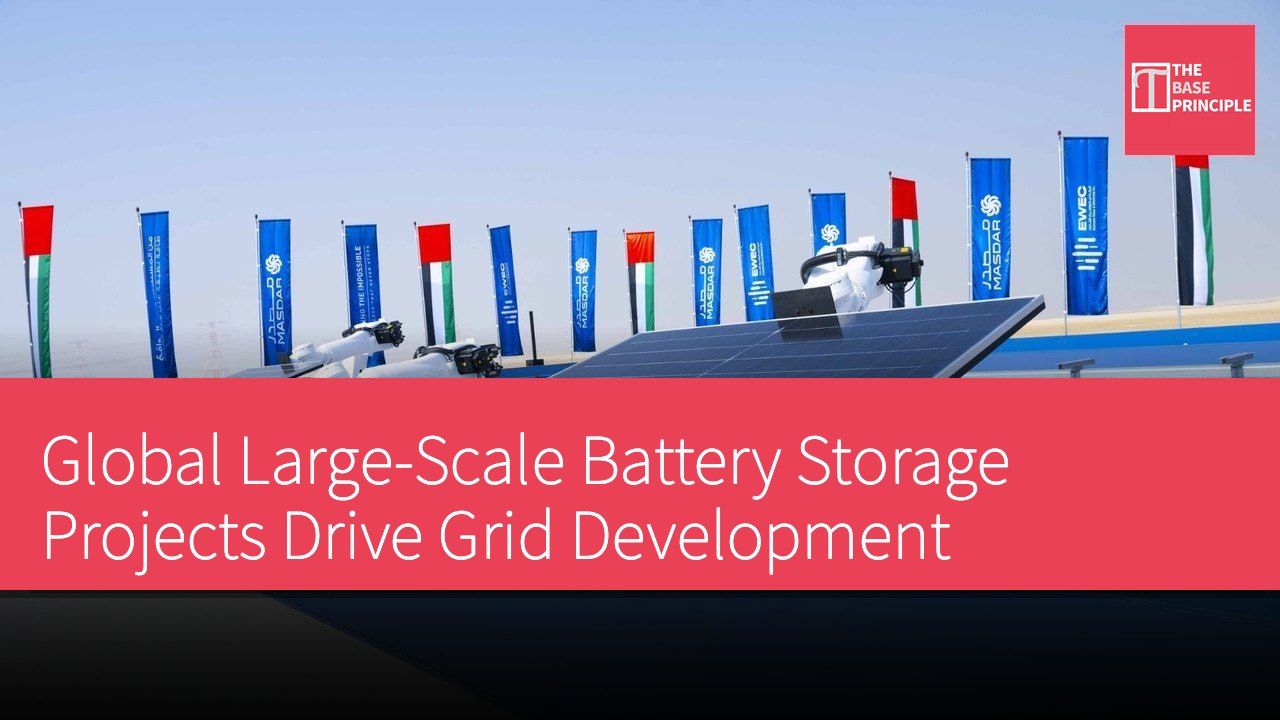
The Masdar–EWEC development project in Abu Dhabi combines a 5.2 GW solar power plant with 19 GWh of battery storage. The project aims to provide 1 GW of renewable power around the clock, extending solar power availability beyond daylight hours. Masdar laid the foundation for the project in October 2025, with a goal of becoming operational by 2027. Its design includes grid-forming technology, black start capability, and forecasting and scheduling systems to coordinate power generation, storage, and supply.
BYD announced in February 2025 that it had signed a 12.5 GWh storage contract with Saudi Electricity Company. The agreement covers multiple grid-scale projects and raises BYD's total cooperation with the utility to 15.1 GWh, including an earlier delivery of 2.6 GWh. MEED identified the plan as five facilities with a total capacity of 2.5 GW, with Alfanar serving as the engineering, procurement, and construction contractor. Equipment supplier NR Electric reported that the SEC's five-region, 2.5 GW storage project completed its grid connection discharge and charge tests on May 27, 2026, marking its operational launch.
Grenergy's Oasis de Atacama is a phased solar and battery storage development project in Chile. Although the initial planned storage capacity was about 11 GWh, the company announced in September 2026 that the overall platform capacity had been increased to 14.1 GWh. This figure reflects broader development conditions, with individual phases set to come online separately. Grenergy confirmed in September 2026 that the fourth phase, Gabriela, had gone into operation, featuring 272 MW of solar generation capacity and 1,100 MWh of battery storage.
Saudi Arabia's 7.8 GWh storage deployment spans three locations: Najran, Khamis Mushait, and Madaya. Sungrow provided over 1,500 sets of PowerTitan 2.0 systems and announced the completion of grid connection in December 2025. The equipment integrates batteries, power conversion systems, medium-voltage transformers, and switchgear into pre-assembled units. Sungrow stated that factory testing and pre-assembly reduced on-site installation work, while local service teams supported installation, commissioning, and grid connection.
Located in Inner Mongolia, the Envision Jingyi Chagan Hada storage power station reports a capacity of 4 GWh. The station connected to the grid by the end of December 2025, becoming part of Envision's broader 12.8 GWh regional storage cluster. According to project demonstrations from the Sustainable Market Initiative, the station passed three charge and discharge verifications with one attempt. Its control system integrates forecasting, scheduling, and electricity market trading to coordinate energy management and sales from storage.
California's Edwards & Sanborn project combines solar generation with 3.287 GWh of battery storage. Developer Terra-Gen and contractor Mortenson announced significant completion of the Kern County development project in January 2024. The installation spans over 4,600 acres, with part of the project located at Edwards Air Force Base. Mortenson confirmed that LG Chem, Samsung, and BYD are battery suppliers, with customers served by the project including California utilities, the City of San Jose, and Starbucks.
Vistra's Moss Landing storage facility reached an installed capacity of 750 MW and 3,000 MWh after its third expansion became commercially operational in June 2023. The expansion added 350 MW and 1,400 MWh, establishing the California site as an important early example of multi-gigawatt-hour battery storage. Its historical capacity needs clarification following a fire at the 300 MW facility in January 2025. The EPA confirmed that no battery storage operations had occurred in the affected buildings since the incident, and Vistra subsequently decided not to restore the standalone 100 MW facility.
Neoen's Collie Battery in Western Australia has a total capacity of 560 MW and 2,240 MWh. The development project includes a 219 MW first phase and a 341 MW second phase; the company reported in October 2025 that both phases are now operational. The service addresses electricity reliability risks associated with the retirement of coal-fired power plants, the growing rooftop solar generation, and the demand from the South West Interconnected System in Western Australia.
The Bisha battery storage facility in Saudi Arabia's Asir Province is rated at 500 MW and 2,000 MWh. Contractor Alfanar describes the installation as a four-hour system capable of storing electricity during low demand periods for redistribution when demand rises. Bisha also demonstrates the capability required after significant grid failures: black start, or restoring power without relying on an energized grid. NR Electric reported successful black start testing in February 2026, utilizing its integrated power conversion, power management, and energy management systems.
Huadian's Kashgar storage project in Xinjiang has a first phase capacity of 500 MW and 2,000 MWh. Huadian Xinjiang's account reported that the first storage block connected to the grid in July 2025. The installation uses 100 lithium iron phosphate storage units and combines grid-forming and traditional storage configurations, each accounting for half of its capacity. The State Grid Kashgar indicated that the project supports the use of renewable power and the stability of the local grid, as photovoltaic generation constitutes a significant share of the total installed capacity.
Challenges in Expanding Battery Storage
These projects illustrate how battery storage is expanding from single installations to multi-site plans measured in gigawatt-hours. The engineering challenges extend beyond capacity to include grid integration, reliable operation, and safety. As more facilities come online, the stability of their storage and supply will be as important as their scale.
Project Specifications Masdar–EWEC 19 GWh SEC–BYD 12.5 GWh Oasis de Atacama 14.1 GWh Najran, Khamis Mushait, and Madaya 7.8 GWh Envision Jingyi Chagan Hada 4 GWh Edwards & Sanborn 3.287 GWh Moss Landing 3 GWh Collie Battery 2.24 GWh Bisha BESS 2 GWh Huadian Xinjiang Kashgar 2 GWh
Future Trends in Battery Storage Technology
As demand for renewable energy increases, the development of battery storage technology becomes increasingly important. These large-scale storage projects not only enhance the stability of electricity supply but also promote more efficient utilization of renewable energy. Projects in various countries showcase different technologies and collaboration models, demonstrating strong market demand for battery storage. In the future, as technology advances and scales up, battery storage will play a more critical role in power grids and address reliability issues in electricity supply.