
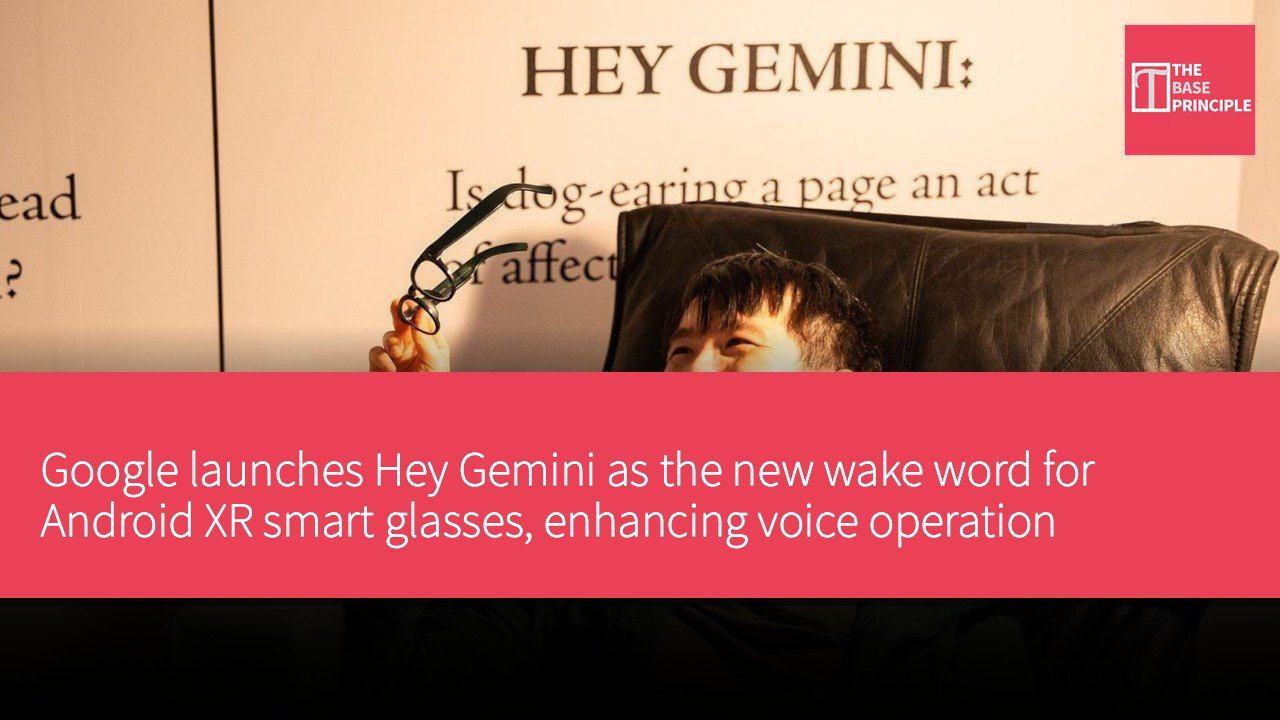
Google has finally announced the launch of Hey Gemini as a wake word, with initial trials on Android XR smart glasses. This new "Hey Gemini" wake word replaces Hey Google as the default wake word for the device, allowing the glasses to be controlled by voice commands in everyday scenarios. Although this wake word is currently limited to smart glasses, and it is unclear whether it will extend to future products, this change offers a new user experience path for those seeking smooth voice interaction. Overall, Google is making progress, but the actual implementation and performance with other devices remain to be observed.
How Hey Gemini operates on Android XR smart glasses, along with privacy and interoperability features to note
Hey Gemini, making its debut as a wake word on Android XR smart glasses, may not necessarily become the default for all future devices. However, its initial integration with cameras, microphones, and touchpad input enhances user convenience in everyday situations. The glasses may also support Hey Bixby alongside Samsung's glasses system, suggesting potential cross-device voice control collaboration between different brands, though the actual functionality needs further clarification.
Regarding privacy, a white indicator light will appear when the glasses are recording or taking photos, and videos and photos will be saved in the user's photo gallery; if the indicator light is obstructed or turned off, recording will stop. When the glasses are removed, recording will also cease; additionally, visual content generated by Gemini commands will not be used for training models or ad targeting, which is a significant commitment to user data protection. The glasses will also automatically obscure the faces of bystanders before processing by Gemini, reflecting Google's commitment to privacy protection.
On the hardware front, the Android XR is powered by the Qualcomm Snapdragon AR1 Gen 1, with the glasses equipped with 2GB RAM and 64GB of storage, supporting Bluetooth 5.4 and Wi-Fi 6E, and rated IPX4 for water resistance. The battery capacity is 245mAh, with an official battery life of approximately 9 hours, and the charging case provides 7 full charges, offering greater flexibility for overall usage. These specifications are relatively practical for users needing high performance during daytime outings.
In terms of design, the glasses frame is lightweight, with a balanced weight distribution that aids in long-term wear; in terms of system integration, in addition to Hey Gemini, various control methods will be offered, such as touchpad, gestures, and voice commands, allowing users to switch operation modes conveniently in different scenarios. At the same time, these glasses can be controlled in conjunction with Pixel Watch and Galaxy Watch, showcasing the potential for ecosystem collaboration between Google and other IoT devices.
For the current product positioning, Gentle Monster and Warby Parker are two different brand partners offering a variety of styles and lens options, starting at US$395, allowing users to choose suitable styles for daily life while retaining functionality as everyday glasses. Samsung is also involved at the hardware level, hinting at potential cross-brand integration in the future. Further deep integration of the Apple, iPhone, and Pixel ecosystems is also a trend worth observing.
For everyday users, the new Hey Gemini wake word is currently being tested primarily on smart glasses and may not immediately expand to other digital devices. Google and Samsung's strategy for the Android XR glasses may serve as a reference model for future voice wake-up in wearable devices. If "Hey Gemini" can work synchronously across more devices in the future, the overall user experience will see substantial improvement.
Contemporary competition and further development of the ecosystem
In terms of hardware specifications and privacy measures, the glasses feature a 12-megapixel ultra-wide-angle lens with HDR and image stabilization capabilities, combined with four microphones for spatial audio capture, providing relatively comprehensive daily image and sound interaction capabilities. Although the specifications of a 12-megapixel wide-angle lens are supplementary external data, they demonstrate support for multiple scenarios in the new product positioning. The diverse styles of regional versions (Gentle Monster, Warby Parker, etc.) reflect Google's efforts to build a commercializable, wearable, and diverse ecosystem.
Additionally, the physical switch design of the glasses allows users to revert to standard eyewear functionality when necessary, enabling a seamless transition between work and leisure. If future developments can further integrate Hey Gemini with everyday interactions (such as map navigation, instant translation, calendar, and notification integration), Google may redefine the role of digital assistant wake words in wearable devices.
In summary, the experimental launch of Hey Gemini on Android XR smart glasses represents Google's practical exercise in voice interaction, ecosystem integration, and privacy protection. Although it currently appears only on glasses, if it expands to more wearable devices while maintaining the same privacy principles, this direction is likely to provide users with a more natural digital experience.
| Item | Specification | Notes |
|---|---|---|
| Processor | Qualcomm Snapdragon AR1 Gen 1 | Core of Android XR device |
| RAM | 2GB | Key to system smoothness |
| Storage | 64GB | Local app and content access |
| Battery Capacity | 245mAh | Approximately 9 hours of single use |
| Battery Life | 9 hours | Indicator for daily outdoor use |
| Bluetooth | 5.4 | Wireless connectivity |
| Wi-Fi | 6E | Fast network support |
| Water Resistance Rating | IPX4 | Everyday splash protection |
For more information on the latest developments regarding Android XR smart glasses, it is advisable to keep an eye on official announcements from Google and partner brands, as both will reveal the future direction of voice interaction in wearable devices.
Disclosure: This article contains links to partner products. If you purchase through these links, TechRitual may receive a commission, but this does not affect product evaluations or recommendations. For more details, please refer to the privacy policy.