
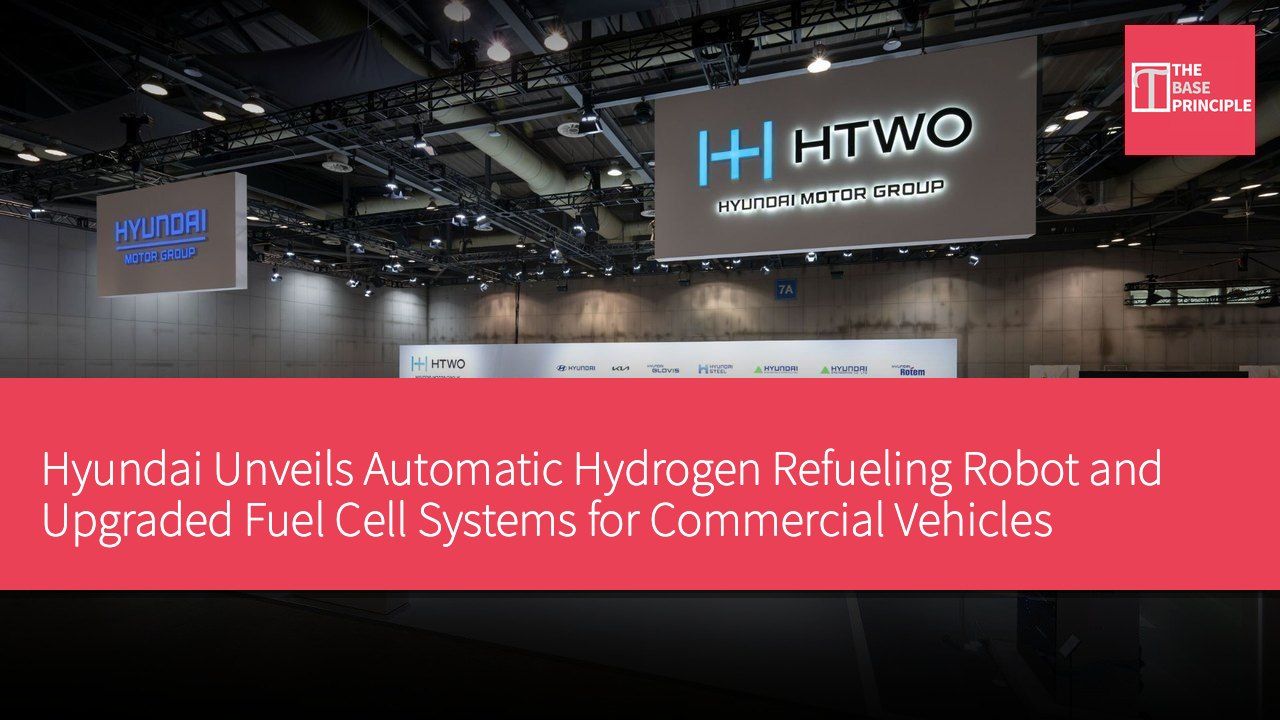
- Hyundai showcases an automatic hydrogen refueling robot, enhancing convenience for commercial vehicle refueling.
- The durable fuel cell system supports reliability for long-distance driving.
- The modular polymer electrolyte membrane technology is scalable to hundreds of megawatts.
- HTWO Energy Cheongju's waste-to-hydrogen solution promotes a circular economy model.
Currently, Hyundai Motor Group is showcasing a robot capable of automatically refueling hydrogen-powered clean trucks, along with a modular hydrogen production system and upgraded fuel cells for commercial vehicles. The World Hydrogen Expo 2026 opens on November 4 in Goyang, South Korea, and will run until November 6. This exhibition is organized by Hyundai's HTWO hydrogen brand and business platform, demonstrating how production infrastructure, transportation, and industrial applications can form a hydrogen ecosystem that connects local resources and demands.
Applications of Automatic Hydrogen Refueling Technology
At the exhibition, Hyundai is showcasing its automatic charging robot - Hydrogen (Automatic Charging Robot-Hydrogen, abbreviated as ACR-H) for the first time, designed specifically for commercial vehicles. This system automatically refuels fuel cell electric clean trucks, aiming to reduce repetitive refueling tasks and provide a more convenient refueling experience for commercial vehicle drivers. The display also covers vehicle operation, maintenance, fleet management, and refueling-related content. Additionally, Hyundai has introduced a fuel cell system with enhanced durability, which improves stack durability and supports reliability for extended operation and long-distance driving.
Its Bluelink Uptime Care fleet management system enables operators to track vehicle operations and component conditions, including anomaly diagnostics, preventive maintenance, and real-time alerts.
The mobile display also features the 2027 NEXO SUV, hydrogen motorcycle models, and flat fuel cell modules, showcasing their potential applications in high-capacity, long-distance transport. In terms of production, Hyundai demonstrated modular polymer electrolyte membrane electrolysis technology, where twelve stacks can be combined into a 5 megawatt-class electrolyzer system module, producing approximately 700 tons (772 short tons) of hydrogen annually. According to the group, the modular architecture can be scaled to hundreds of megawatts. A 1 megawatt-class container demonstration facility in Gwangju is already operational, with other demonstration projects being pursued in locations such as Boryeong, Pocheon, and Jeju.
Combining Hydrogen Energy with the Circular Economy
Hyundai also showcased a waste-to-hydrogen solution centered around HTWO Energy Cheongju, which converts organic waste into hydrogen as part of a circular economy model. Other ongoing projects include a biogas-based hydrogen production facility in Paju and a localized customization program in Indonesia.
In addition to individual technologies, Hyundai's exhibition also illustrates scenarios connecting hydrogen production and consumption between cities, ports, logistics operations, and manufacturing sites. The Saemangeum AI Valley concept links solar energy and electrolysis with AI data centers, robotic manufacturing plants, and AI hydrogen city concepts, demonstrating how hydrogen, AI, and robotics can be integrated into urban infrastructure and services within a self-sustaining circular ecosystem. Visitors can also board a development model of the ELEC CITY fuel cell low-floor intercity bus to explore its accessibility features.
The ride program involving the enhanced UNIVERSE fuel cell bus and the new XCIENT fuel cell tractor is open to selected industry participants and media.
The World Hydrogen Expo 2026 brings together approximately 190 companies and organizations from 12 countries. In addition to the exhibition, conferences and partnership projects focus on hydrogen business opportunities, project investments, and international cooperation. Hyundai stated that its exhibition aims to showcase practical hydrogen systems that adapt to the needs of different regions and industries.
How Hyundai is Advancing the Hydrogen Ecosystem
The technologies showcased by Hyundai at the World Hydrogen Expo not only highlight the application of hydrogen in commercial vehicles but also demonstrate its potential in production and the circular economy. The automatic hydrogen refueling robot and the durable fuel cell system reflect the company's commitment to improving operational efficiency and reliability. Furthermore, the modular electrolysis technology and waste-to-hydrogen solutions indicate that Hyundai is dedicated to establishing a sustainable hydrogen ecosystem, which is significant for future energy transitions and environmental protection.