
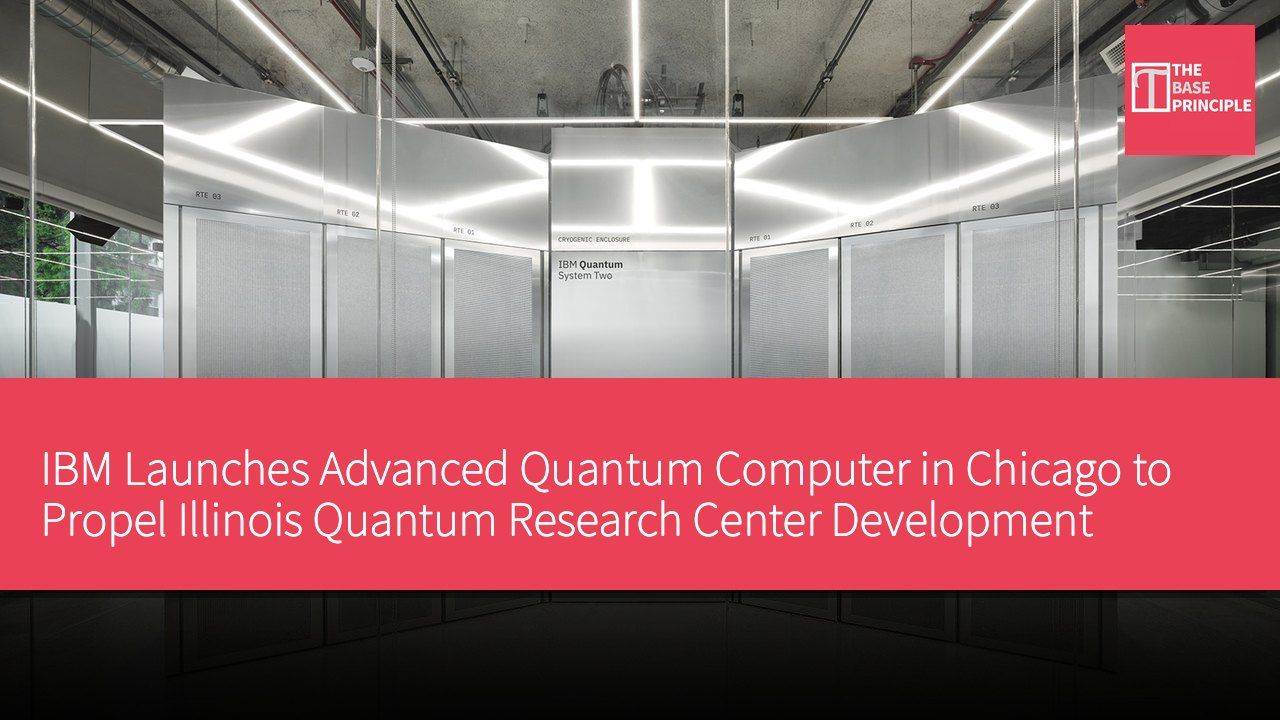
- IBM has launched a quantum computer in Chicago to advance the development of a quantum research center.
- The quantum computer will be the core system of the National Quantum Algorithms Center.
- This system aims to tackle computationally challenging problems and facilitate projects such as drug discovery.
- IBM plans to create numerous job opportunities related to quantum computing.
IBM has introduced its most advanced quantum computer in Chicago, providing researchers and businesses in Illinois with the technology to help establish a major quantum research and development center in the state. The IBM Quantum System Two is now operational at the Hyde Park laboratory, hosted by the University of Chicago. The system is powered by IBM Quantum Nighthawk, which the company describes as its most powerful quantum processor to date. The installation was unveiled on November 6, marking IBM's first deployment of a quantum computer in Illinois.
The Core Role of Quantum Computers
This machine will eventually be relocated to the Illinois Quantum and Microelectronics Park (IQMP), which is currently under construction in Chicago. This computer will serve as the core system of the National Quantum Algorithms Center (NQAC), established by Illinois Governor JB Pritzker in 2024, with IBM as a key member. The center brings together businesses, universities, and research institutions dedicated to developing algorithms and applications that can scale with advancements in quantum hardware.
IBM stated that this system is designed to assist organizations in Illinois in exploring computationally challenging problems using quantum computing technology. Existing projects include developing quantum-based drug discovery methods. Deloitte and pharmaceutical company AbbVie are collaborating with IBM and Northwestern University through the NQAC Grand Challenge program to investigate molecular simulation methods. Another collaboration involves the Electric Power Research Institute (EPRI) and the University of Illinois at Urbana-Champaign. Partners are exploring whether quantum optimization algorithms can help improve the efficiency of the power grid. Fermi National Accelerator Laboratory is also working with IBM on high-energy physics research and the development of distributed quantum computing technologies.
The University of Chicago and IBM have separately reported on demonstrating quantum advantage using methods that guarantee correctness, highlighting the research activities already underway in the state's quantum ecosystem.
Potential Impact of Quantum Technology
The arrival of System Two is part of Illinois's efforts to position itself as a hub for quantum technology and microelectronics. Once completed, the IQMP will house research facilities and companies focused on developing and commercializing technologies in these fields. IBM CEO Arvind Krishna stated that this deployment will help organizations in Illinois and the broader region generate scientifically valuable outcomes. The company also anticipates that this system will support the development of new algorithms and applications with potential real-world application value. This investment is also related to workforce development.
IBM previously announced plans to establish its FutureNow Chicago center at IQMP and collaborate with the City Colleges of Chicago. This initiative is expected to bring 750 job opportunities related to quantum computing, cybersecurity, and data science to the region.
Quantum computers use quantum bits, or qubits, to process information based on the principles of quantum mechanics. Unlike traditional bits that represent either zero or one, qubits can exist in a combination of states. This allows quantum systems to solve certain problems that traditional computers may find difficult to handle. However, practical applications remain an active area of research, and quantum machines do not replace traditional computers. Currently, IBM's deployment in Chicago enables researchers and industry partners to directly access its latest quantum hardware, helping them identify problems where this technology can provide advantages.
Quantum Computing Drives Regional Technological Development
IBM's deployment of a quantum computer in Chicago marks a significant advancement for the state in the field of quantum technology. This system will not only serve as the core of the National Quantum Algorithms Center but will also facilitate various research projects, including drug discovery and power grid optimization. As quantum technology advances, Illinois is expected to attract more businesses and research institutions, creating numerous related job opportunities and further solidifying its position in the fields of quantum technology and microelectronics.