
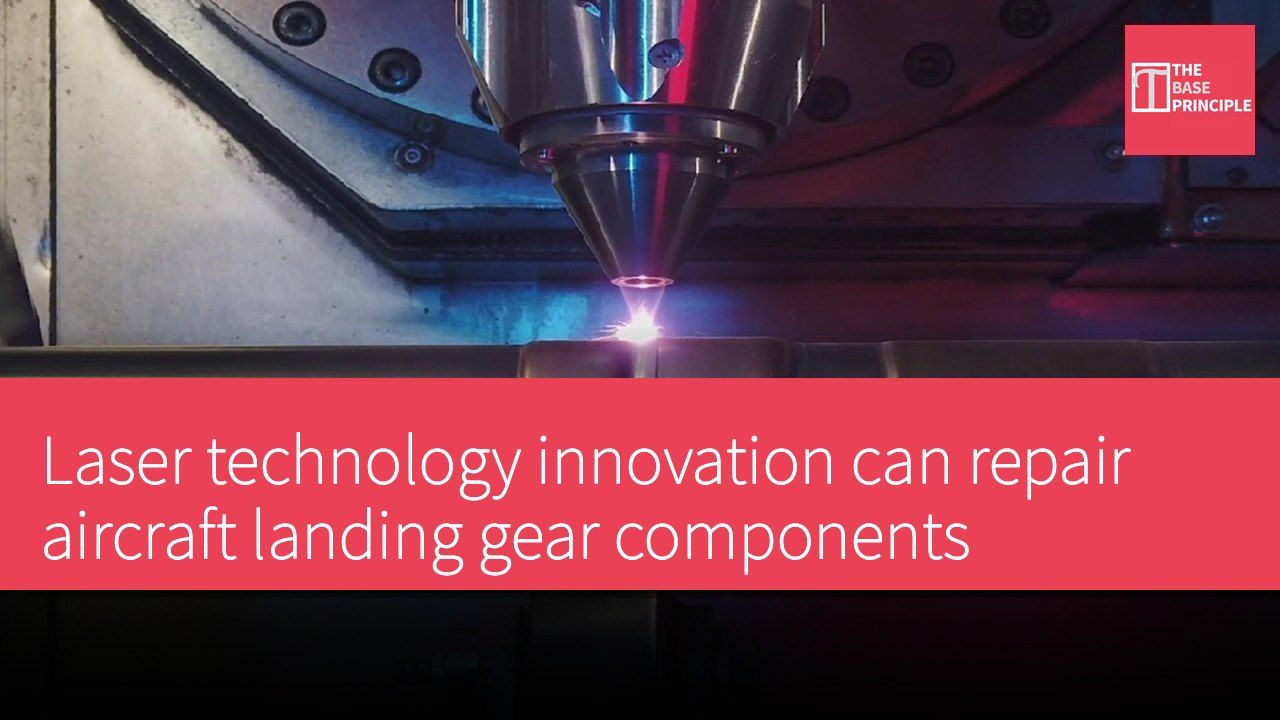
- Researchers have developed a laser-based maintenance method for aircraft landing gear components.
- High-speed laser material deposition technology (EHLA) can quickly repair aerospace components.
- Simultaneous coating and roller burnishing technology reduces finishing steps and increases efficiency.
- Researchers are testing the technology to meet aviation standards.
Challenges of Traditional Maintenance Methods
Beyond this range, replacing components becomes the only option, which is not only costly but also renders the aircraft unavailable for extended periods. High-speed laser aviation maintenance Traditionally, chrome plating has been used to protect surfaces; however, environmental and occupational safety considerations have prompted scientists to seek alternatives. Welding components is not a viable alternative, as excessive heat can alter the microstructure of aerospace steel and change the geometry of the parts. To address these challenges, scientists at the Fraunhofer Institute for Laser Technology ILT in Germany have designed a high-speed variant of laser metal deposition (LMD).
Extreme high-speed laser material deposition technology (EHLA) is a faster version of LMD that uses lasers to melt metal powder and apply it precisely where needed. The speed of this process far exceeds traditional methods, while the heat generated is also lower, making it suitable for repairing or coating heat-sensitive high-strength aerospace components.
Implementation of Innovative Technology
Researchers have turned to this improved method to operate in real-world scenarios, not just in the laboratory. Harald Betsch, a senior expert in thermal spraying/welding materials and processes at Liebherr-Aerospace, stated, "It is important that the process is suitable for real landing gear components under load, including their materials, damage modes, and repair limitations." Hard roller burnishing for finishing After laser-assisted metal deposition, the team immediately applies hard roller burnishing to the material, rather than cutting or grinding, completing this process in a single step.Researchers refer to this as simultaneous coating and roller burnishing (SCaRB). Kim Julia Kallies, project manager at Fraunhofer ILT, explained, "For us, the key is to utilize the still-warm layer rather than completing the EHLA coating in a subsequent separate operation." By smoothing and strengthening the newly deposited, still-warm metal layer, the need for a separate finishing step is eliminated, reducing setup time and allowing researchers to tailor the surface quality, hardness, and residual stress of the repaired aerospace components. Researchers noted that they can adjust the hardness, surface quality, and residual stress of the repair area by modifying process parameters, including laser power, powder feed, the distance between the laser and the burnishing tool, burnishing force, roller radius, and hardness. The technology is still undergoing validation, with researchers testing the durability of materials under real-world conditions. In addition to the repair process, the team also utilizes lasers to inspect coating and subsurface quality without damaging the repaired components. This method is known as LAwave (an abbreviation for laser-induced surface acoustic wave spectroscopy), which generates sound waves and analyzes their propagation through the material.
However, this method still requires further development to meet aviation standards, and researchers are currently testing representative loads on real landing gear geometries.
Impact of Laser Technology on Aviation Maintenance
As the aviation industry increasingly demands maintenance efficiency and safety, traditional maintenance methods can no longer meet modern needs. The high-speed laser material deposition technology (EHLA) developed by researchers not only enhances repair speed but also reduces damage to heat-sensitive components. By combining simultaneous coating and roller burnishing techniques, repairs can be completed in a single step, significantly improving maintenance efficiency. The successful implementation of these innovative methods could potentially lower maintenance costs for aircraft and extend the lifespan of components, which is crucial for enhancing aviation safety.