
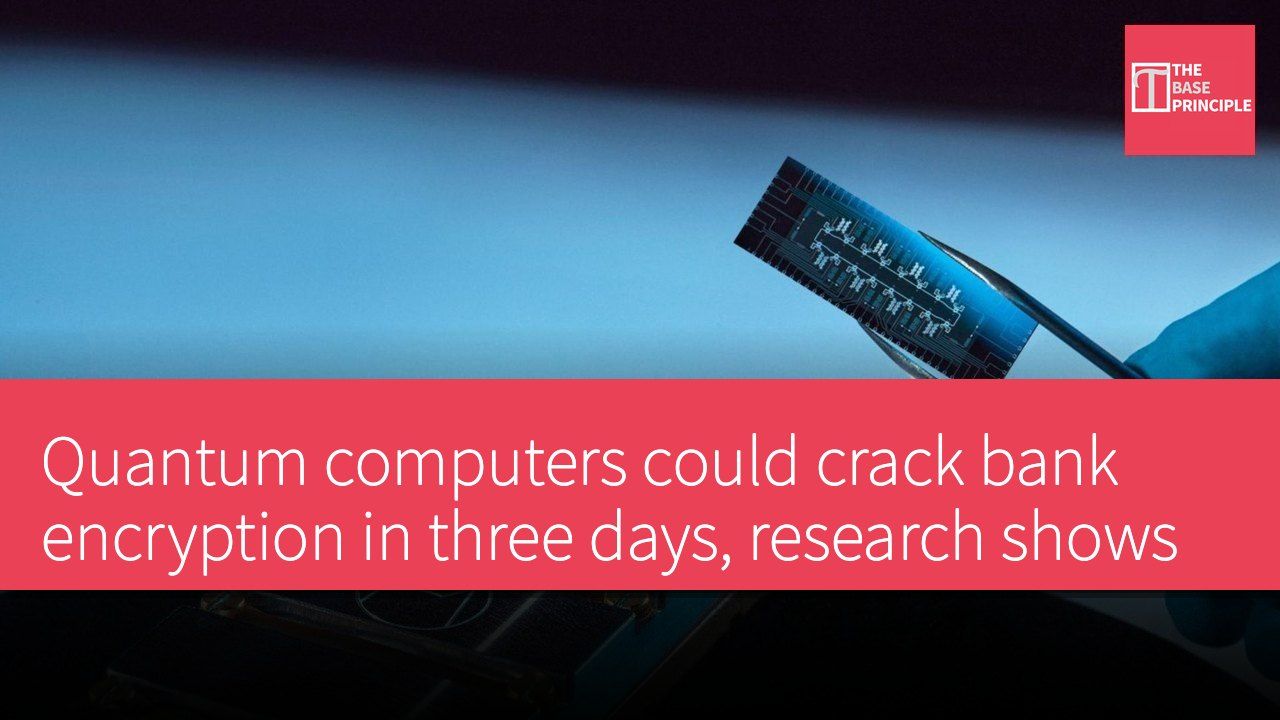
- RSA-2048 encryption can be cracked by a quantum computer with 23,000 qubits.
- The advent of quantum computers makes breaking encryption relatively easy and cost-effective.
- Cracking RSA-2048 requires running Shor's algorithm and having error correction mechanisms in place.
- Building a quantum computer capable of breaking RSA-2048 will become feasible in the coming years.
RSA-2048, a high-end encryption technology that protects your bank accounts and online data, can be broken by a quantum computer with 23,000 qubits, according to a detailed study by the French company Alice & Bob. Although this is only an estimate, the quantum computing company believes this could become a reality by the end of this century. RSA-2048 is considered the gold standard of encryption, safeguarding our digital infrastructure, from websites and social media to online banking and data storage. This encryption method is deemed extremely difficult to crack due to the need to factor a 617-bit modulus into two prime numbers.
In practical terms, creating this encryption is relatively easy, but breaking it presents significant challenges. The cost for traditional computers to crack this encryption would be astronomical, far exceeding the benefits of breaking it. However, the emergence of quantum computers has completely changed this scenario, making encryption breaking relatively easy and cost-effective.
What is Shor's algorithm? In 1994, mathematician Peter Shor introduced his famous algorithm that can break RSA-2048 encryption. The only barrier is that this algorithm requires a sufficiently large and accurate quantum computer to run. Because physical qubits are prone to errors, a quantum computer running Shor's algorithm also needs to have error correction mechanisms to ensure it provides correct answers. In 2019, researchers at Google Quantum AI predicted that breaking RSA-2048 would require a quantum computer with 2,000,000 physical qubits.
Shor's Algorithm and Quantum Computing
In the following six years, this number dropped to below 1,000,000. This progress is partly attributed to improvements in the efficiency of the algorithm itself, which has undergone 30 years of development. On the other hand, advancements in quantum computing technology have led to improved logical performance of qubits.
The help of cat qubits. A French quantum computing company using cat qubits made a similar estimate of Shor's algorithm in 2023, finding that it could be cracked with just 350,000 qubits. According to the latest estimates using improved cat qubits, this number has now dropped to 23,000, with the time required to crack the encryption being 3.14 days. While 23,000 qubits is not currently achievable by existing quantum computers, this number is relatively easy to achieve in the coming years. In addition to the number of qubits, the runtime is also very important.
Thus, a quantum computer with 610,530 cat qubits could complete the same task in just 1.5 hours. The challenge of scaling up to such a large number of qubits lies in the additional infrastructure required to operate such a quantum computer, as well as placing everything within a suitably sized laboratory.
Future Encryption Challenges
Researchers at Alice & Bob believe that building such a quantum computer will be possible in the coming years, at which point RSA-2048 encryption will be considered obsolete. Fortunately, there are already some post-quantum encryption standards available, but they have not yet been widely tested. The paper encourages the cybersecurity community to conduct more rigorous testing of these standards and transition systems to these new algorithms before quantum computers become more prevalent. This research has not yet been peer-reviewed and has been published in the Cryptology ePrint Archive.
The Impact of Quantum Computing on Digital Security
As quantum computing technology rapidly advances, traditional encryption methods like RSA-2048 face unprecedented challenges. Quantum computers can break these encryption techniques at a lower cost and in a shorter time, posing a serious threat to digital security. While there are already post-quantum encryption standards, they have not been widely tested, meaning that the cybersecurity community must accelerate the testing and implementation of new algorithms to protect data security before quantum computers become mainstream.