
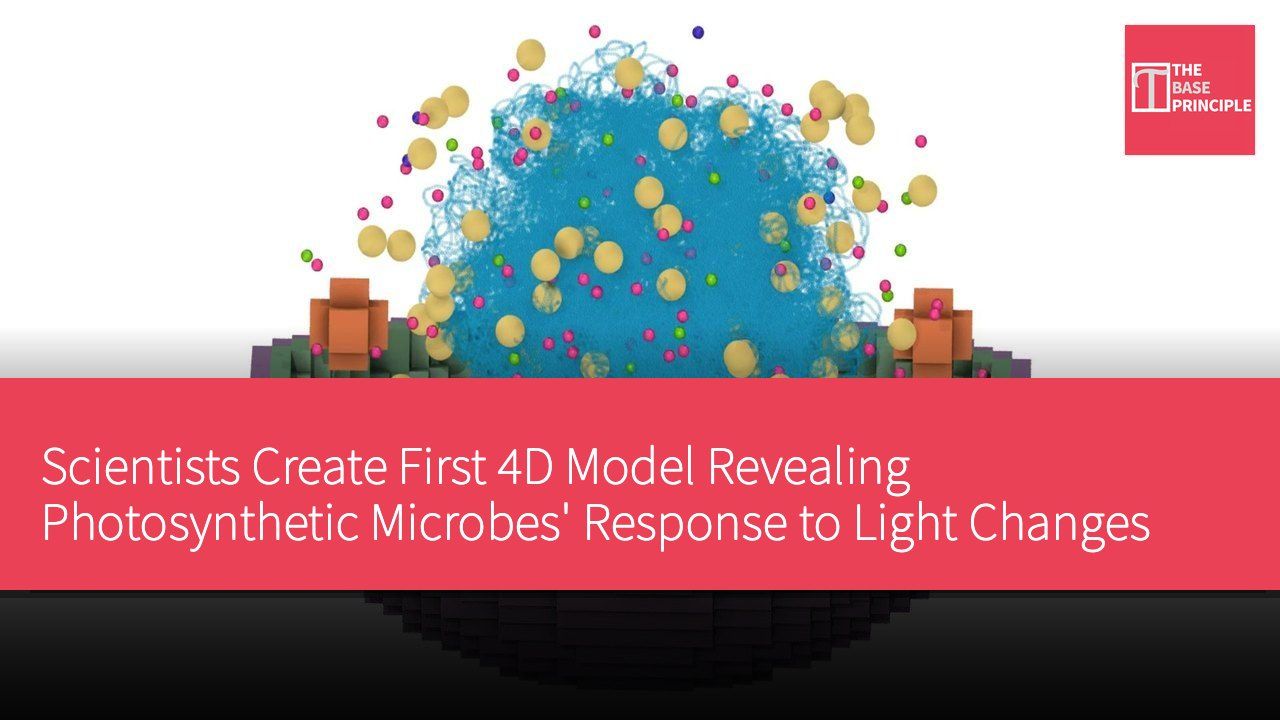
- Scientists have developed a complete four-dimensional model of photosynthetic microbes.
- The model tracks the three-dimensional organization and internal activities of bacteria over time.
- The spatial organization of proteins within the cell influences the reliability of molecular interactions.
- This research may guide future cellular studies.
Researchers have developed the first complete four-dimensional model of photosynthetic microbes, illustrating how entire cells adapt to changes. The model tracks the three-dimensional organization of bacteria and the activities occurring within over time, providing a detailed view of how cells coordinate internal processes in response to variations in light. This study, conducted by scientists at the Pacific Northwest National Laboratory (PNNL) and the University of Illinois Urbana-Champaign, focuses on the small marine bacterium Prochlorococcus marinus MED4, which harnesses sunlight to generate energy and plays a crucial role in marine ecosystems and the global carbon cycle.
Margaret Zhang, a computational scientist at PNNL and co-author, stated, "This research allows us to gain a detailed understanding of how entire photosynthetic cells respond." The research team utilized cryo-electron tomography images, time-series data, physical models, and high-performance computing to integrate information on how the spatial organization of the cell relates to changes in genes, proteins, and metabolic processes. This enabled the team to observe interactions between different parts of the cell.
Innovation of the 4D Model
The model incorporates a fourth dimension of time to show how internal activities of the cell change as the microbes transition between light and dark. The team examined cultures transitioning from darkness to light and back to darkness, as well as cultures under constant light or in darkness. This helps scientists understand how cells respond to changes in environmental conditions and the extent to which the microbes' biological clock influences this response. Jan Luther-Scheltens, a chemistry professor at the University of Illinois Urbana-Champaign and co-author, noted, "Coordinated measurements allow us to test the model."
The research indicates that the spatial organization of proteins and other structures within the cell can affect the reliability of molecular interactions. The positioning of these structures helps reduce random fluctuations during activities, suggesting a strong connection between the physical organization of the cell and its chemical regulation.
Impact of Internal Activities on the Cell
For instance, the CP12 protein regulates carbon fixation by binding to two enzymes involved in the carbon fixation process, forming an inactive complex known as the "dark complex" in the dark. This means that during darkness, these enzymes cannot perform carbon fixation. When light becomes available, CP12 and the enzymes undergo changes, leading to the disassembly of the complex and releasing the enzymes to resume carbon fixation. This process occurs even faster than the cell's production of new proteins, indicating that bacteria can quickly respond to changes in environmental conditions.
This research is published in the Biophysical Journal and is supported by the Department of Energy's Biological and Environmental Research Virtual Environment Program. Part of the research was conducted at the Environmental Molecular Sciences Laboratory (EMSL). Computational resources were provided by the 2024 Advanced Scientific Computing Research Leadership Computing Challenge Award and EMSL's Tahoma high-performance computing system. By simultaneously observing the physical structure of the cell and its activities over time, this model aids scientists in understanding how photosynthetic microbes respond to changes in environmental conditions.
This technology may provide scientists with tools to understand how other cells regulate complex processes and link molecular activities to entire living systems. This could help guide future cellular research.
Potential Impact of the 4D Model on Biological Research
The four-dimensional model from this research offers profound insights into the responses of photosynthetic microbes, particularly their adaptability under changing environmental conditions. By incorporating the time dimension, scientists can gain a more comprehensive understanding of the dynamic processes within cells, which is significant for exploring regulatory mechanisms in other biological systems. As technology advances, such models may become foundational for future research, helping scientists unveil complex biological processes and furthering developments in biotechnology and environmental science.