
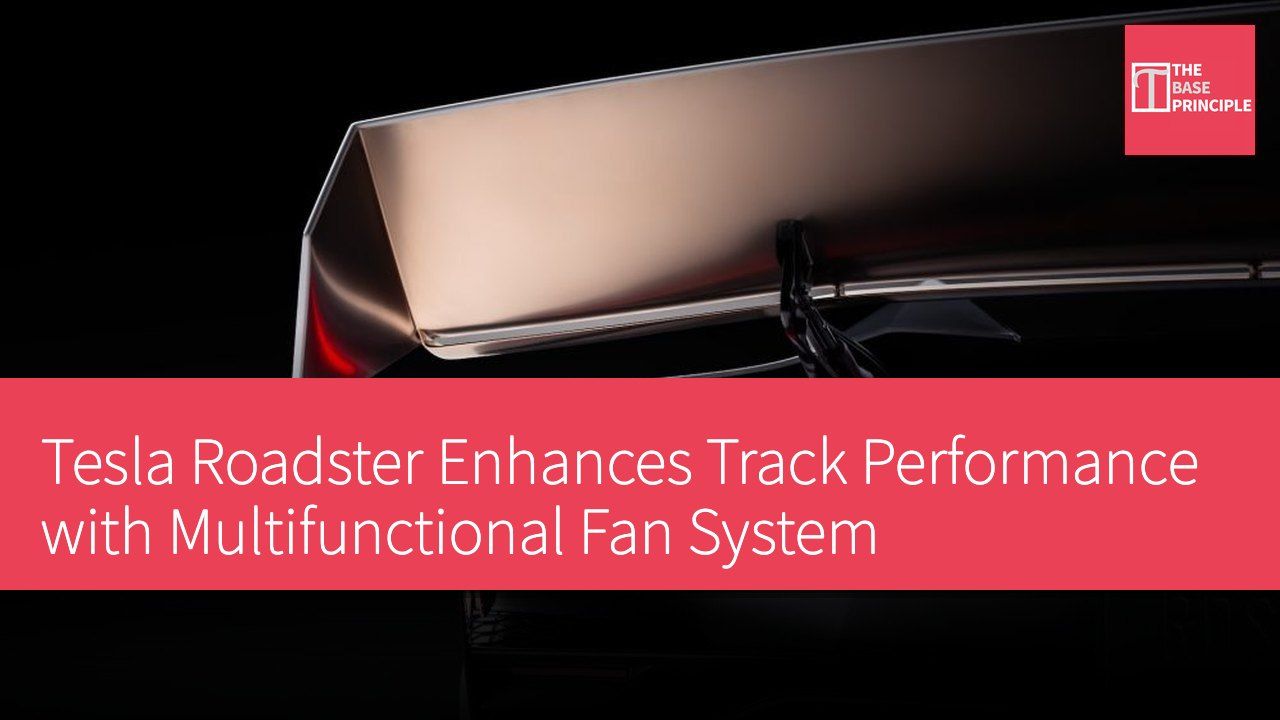
- The multifunctional fan system of the Tesla Roadster generates downforce at any speed.
- The vehicle uses lightweight materials to enhance responsiveness and performance.
- Tesla has not released any lap times or verified cornering data.
- The booster function is limited to the invitation-only Rocket configuration and has not been approved.
The new Tesla Roadster is renowned for its aerial performance in Texas, but the most critical technology for the track is the device that keeps it stable on the ground. Tesla's Roadster page describes a multi-mode fan and ground seal system that acts as a downforce generator, pulling air out from underneath the vehicle. Tesla claims that the suction provided by this system is sufficient to keep the vehicle inverted while stationary. This is a key difference from conventional supercars, which rely on wings and diffusers that generate downforce only when the vehicle is in motion, thus providing the least grip during slow corners and hard braking.
Advantages of the Fan System
In contrast, the fan system can generate downforce at any speed. A patent filed by Tesla last year describes fans and deployable side skirts that create sealed or partially sealed areas underneath the vehicle, with the fans extracting air to lower pressure and enhance grip and stability.
Tesla combines these technologies with active wings, a next-generation electric steering system, and Track Mode, which lowers the body and alters the suspension to provide a high downforce and low drag setup for the track. To reduce weight, Tesla notes the use of materials such as magnesium, titanium, and carbon fiber, along with manual controls and fixed seat positions, allowing the vehicle to respond almost instantaneously to driver inputs.
The Tesla Roadster offers three configurations, one of which enables flight, with a 0-60 mph acceleration time of 0.8 seconds. The cold gas thruster is another component. In the Thrust version, the thruster is located at the rear, and Tesla states that this configuration can accelerate the vehicle to 60 mph in under 0.9 seconds, while the Rocket version adds peripheral thrusters for forward, upward, and lateral movement. Tesla claims that all electric actuators can make adjustments within milliseconds.
Technical Challenges and Future Outlook
These aerodynamic features are not just for show: they provide the best passive downforce system in any road car (approaching F1 levels), with the activation of the wings driven by the @Tesla_Optimus actuator system. Elon Musk has been discussing record-breaking capabilities for years. In June 2019, he stated, “We’re going to do some things with the new Roadster that are a bit unfair to other vehicles.” In September of that year, when a follower asked if the Roadster could break the production car record at Nürburgring, he replied with one word: “Absolutely.”
As we reported at the time, in February 2024, he stated that Tesla had “completely raised the design goals for this car,” noting that its sub-one-second 0 to 60 acceleration time would be “the least interesting part.”
However, there are still some caveats. Tesla has not released any lap times or verified cornering data, so discussions of records remain a promise rather than a result. Tesla also stated that the vehicle has not yet been approved for public road use, and the booster function is limited to the Rocket configuration, which is invitation-only. Fan vehicles have also faced bans or withdrawals in the past, and making a sealed underbody work on rough public roads is significantly more challenging than on smooth tracks. The first real test will be the official lap time on the track.
Performance and Market Challenges for the Tesla Roadster
The multifunctional fan system of the Tesla Roadster represents a significant advancement in automotive design, providing stable downforce at varying speeds, which is crucial for track performance. However, despite the advanced technology, Tesla still faces market challenges, including unverified performance data and restrictions on public road use. These factors may affect consumer confidence in the vehicle, especially in the highly competitive high-performance electric vehicle market.