
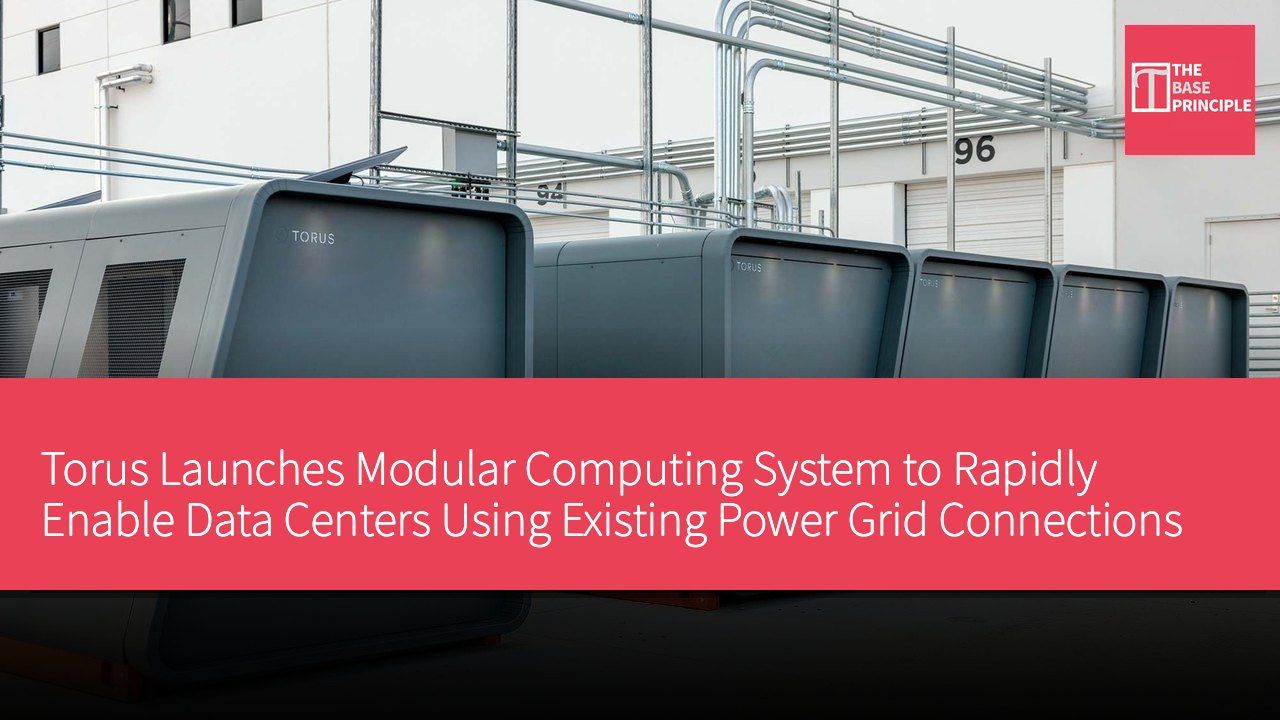
- Torus has launched the modular computing system Foundry, aimed at enhancing inference capabilities at existing locations.
- The system supports computing capacities from 1 to 20 megawatts and can be operational in a short time frame.
- Foundry is designed for distributed deployment, increasing enterprises' control over data processing.
- This $500 million funding will support the expansion of its energy storage and computing systems.
Torus has launched a modular computing system designed to enhance inference capabilities at existing commercial and industrial sites, utilizing available power grid connections without waiting for new data center infrastructure. The Salt Lake City-based energy and infrastructure company introduced Foundry on November 11, while announcing a $500 million funding round led by Magnetar. This funding will support the manufacturing expansion and deployment of its energy storage and computing systems in the United States, coinciding with a growing demand for inference computing. Unlike model training, which involves developing and refining models, inference runs these models to generate responses and execute tasks.
McKinsey predicts that demand for inference in data centers will grow at an annual rate of 35% before 2030, while training will see a 22% growth. The Foundry system combines computing hardware, power systems, energy storage, cooling, and networking into a prefabricated modular unit. Torus states that each location can support computing capacities from 1 to 20 megawatts and can transition from contract to operational workload within 12 to 16 weeks.
Features of the Modular Computing System
The system is designed to operate at existing commercial and industrial sites, utilizing available power capacity. Torus aims to leverage existing interconnections and manage power demand through its Torus Reserve energy storage system, without waiting for new grid connections or large-scale infrastructure upgrades. Reserve combines battery storage and inertia technology to manage peak demand, provide backup power, and adjust power consumption. The company claims its load management controls can help meet the fluctuating power demands of computing hardware while supporting grid stability.
Foundry is also designed for distributed deployment, bringing computing resources closer to enterprises and the workloads they serve. Torus believes this could be attractive to businesses seeking greater control, particularly regarding data processing, security, and intellectual property protection.
Options for Multiple Deployment Models
Torus offers Foundry through three deployment models. The strategic option provides a power shell without GPUs, while the partner configuration includes computing hardware. Its direct model offers dedicated single-tenant inference capabilities for enterprise customers. The company has named AI infrastructure provider Hydra Host as one of the first customers of Foundry, along with another unnamed cloud service provider. Torus states that thousands of GPUs have already been deployed in Foundry units, with plans to increase that number to over 47,000 by the end of 2027.
These systems are manufactured at GigaOne in Salt Lake City, Utah, which spans 545,000 square feet. The company states that its Foundry production line is designed to support 500 megawatts of IT load, with plans to expand capacity to 1,000 megawatts.
Torus also states that Foundry utilizes a closed-loop, waterless cooling system, consuming 95% less water than evaporative cooling systems. These environmental and performance data are claims reported by the company. The $500 million funding round was led by Magnetar, with participation from ICONIQ, Origin Ventures, Ridgeline Partners, and Trinity Capital. This launch reflects the growing efforts to address data center power limitations by decentralizing computing capacity to existing locations.
However, the deployment timeline for Foundry, available grid capacity, and planned GPU expansions still depend on conditions at individual locations and future execution.
Item Specifications Computing Capacity 1 to 20 megawatts IT Load Support 500 megawatts, planned expansion to 1,000 megawatts Manufacturing Facility Size 545,000 square feet
Impact of the Modular Computing System on Data Centers
Torus's Foundry system, through its modular design, enables rapid deployment of computing capacity at existing commercial and industrial sites, which is significant in light of the growing demand for inference computing. As data processing needs rise, enterprises' demand for greater control and flexibility also increases. This system not only reduces reliance on new grid infrastructure but also effectively manages power demand and enhances grid stability. In the future, this model may become a new trend in data center operations, especially against the backdrop of increasing importance placed on environmental and resource management considerations.