
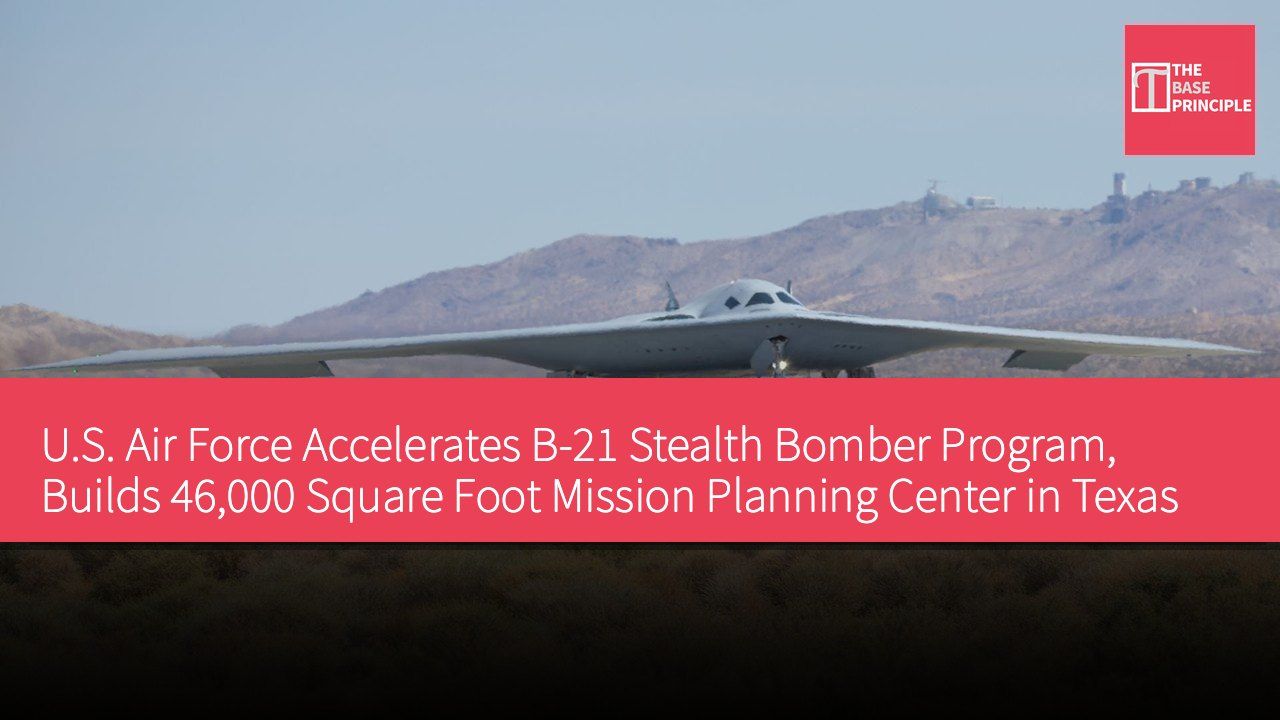
- The U.S. is accelerating the B-21 stealth bomber program, building new facilities to support future operations.
- The mission planning center in Texas will be central to B-21 mission generation.
- This new building is the first milestone in a broader modernization plan for Dyess Air Force Base.
- Investment in ground facilities is as crucial as production of the airframe to ensure B-21 operational readiness.
The United States is accelerating preparations for its next-generation stealth bomber fleet. The Pentagon is expanding its factory in California while constructing a dedicated high-security facility in Texas to support future flight operations. At Dyess Air Force Base near Abilene, construction crews have begun work on a 46,000 square foot mission planning complex. The building, which costs $78 million (approximately HK$609,000,000), is the first specifically designed for the B-21 Raider at the base.
The B-21 Raider is a long-range stealth aircraft designed to penetrate advanced aerial defense networks. The Texas project complements manufacturing advancements on the West Coast. In October of this year, the Air Force and contractor Northrop Grumman began construction of a final assembly facility covering 1 million square feet at the Air Force Plant 42 in Palmdale, California. Under a joint agreement, the site will increase B-21 production by 25% annually. This will enable the Pentagon to deliver operational aircraft to combat squadrons at a faster pace.
New Building as Mission Hub
The new building at Dyess Air Force Base will serve as the nerve center for operating these upcoming bombers. Modern stealth missions require a complex ground support infrastructure. Ground teams must calculate radar-evading flight paths, handle classified target intelligence, and maintain encrypted satellite communications before crews enter contested airspace. Colonel Robert Stugill, commander of the 7th Bomb Wing, stated that this secure facility will be central to B-21 mission generation. He emphasized that modern communication networks and robust physical security are critical for Air Force personnel executing long-range global strike missions.
Modernization Plan for Dyess Base
This planning complex represents the first milestone in Dyess's broader $1.6 billion modernization plan over the next decade. The ten-year blueprint includes more than 24 military construction and renovation projects, upgrading hangars, maintenance areas, dormitories, and family childcare facilities. Base leadership must carry out this extensive renovation while maintaining the operational readiness of the existing B-1 Lancer bomber and C-130 transport squadrons.
Dyess has supported the U.S. strategic bomber fleet since the early Cold War, having operated B-47 Stratojets, B-52 Stratofortresses, and supersonic B-1s. Air Force officials noted that this operational legacy and the expansive local airspace were key reasons for the base's selection to transition to sixth-generation air power. Strategic deterrence and long-term readiness are emphasized by Air Force Under Secretary Matt Lohmeier, who stated that investing in ground facilities is as important as producing the airframe. He described the B-21 Raider as the world's first next-generation bomber and pointed out that frontline infrastructure must be fully operational before the aircraft arrives.
Legislators supported this investment through the National Defense Authorization Act. Senator Ted Cruz praised the base's critical role in national security and military lethality, noting that the Raider ensures West Texas will remain at the forefront of U.S. strategic deterrence for decades to come. He concluded, "With the arrival of the B-21 Raider, Dyess will play a core role in U.S. air power and our nation's strategic deterrence for decades and even centuries to come."
The Air Force is expanding its factory in California and constructing bases in Texas to prevent costly integration delays. When the bombers roll off the assembly line, the necessary security networks will already be operational.
Impact of the B-21 Program on U.S. Military Strategy
The development of the B-21 Raider marks a strategic transformation for the U.S. Air Force in future warfare. With the construction of new facilities, the Air Force can ensure the effective operation of the bombers and enhance its capabilities in global strike missions. This represents not only an investment in technology but also a recognition of the importance of ground support systems, reflecting the complexities of modern warfare. As infrastructure gradually improves, Dyess Air Force Base will play an increasingly important role in U.S. air power, further enhancing the nation's strategic deterrence capabilities.