
- The U.S. and European institutions are collaborating to build the Deep Underground Neutrino Experiment, aimed at studying neutrinos.
- DUNE will bring together over 1,500 researchers to conduct significant physics research.
- CERN is responsible for the design and construction of the cooling tanks, showcasing its technical expertise.
- SURF is in charge of shaft operations, ensuring the transport of equipment to the underground laboratory.
The U.S. Fermi National Accelerator Laboratory (FermiLab), the European Organization for Nuclear Research (CERN), and the Sanford Underground Research Facility (SURF) have joined forces to construct the Deep Underground Neutrino Experiment (DUNE) in South Dakota. The experiment, located nearly a mile underground, will utilize large cooling tanks to maintain liquid argon at extremely low temperatures, aiming to study neutrinos and provide critical insights into events following the Big Bang, thereby expanding our fundamental understanding of the universe. Neutrinos are electrically neutral subatomic particles with very little mass, known for their mysterious properties that allow them to evade gravity and nuclear forces, passing through our bodies daily without leaving a trace.
Since neutrinos are produced in the cores of stars and can travel long distances, scientists can study them by building detectors on Earth.
The Significance of Neutrino Research
Observing neutrino interactions and how slight differences in mass alter their characteristics can help explain why there is more matter than antimatter in the universe, further refining the standard model of physics we use today. DUNE's underground detectors will be the leading experiment globally, gathering over 1,500 researchers who will work at FermiLab. The cooling tanks currently under construction will store liquid argon at -300 degrees Fahrenheit (-184 degrees Celsius). By 2030, when DUNE's liquid argon detectors are ready, FermiLab's accelerator will fire neutrinos toward the detectors from 800 miles (1,300 kilometers) away.
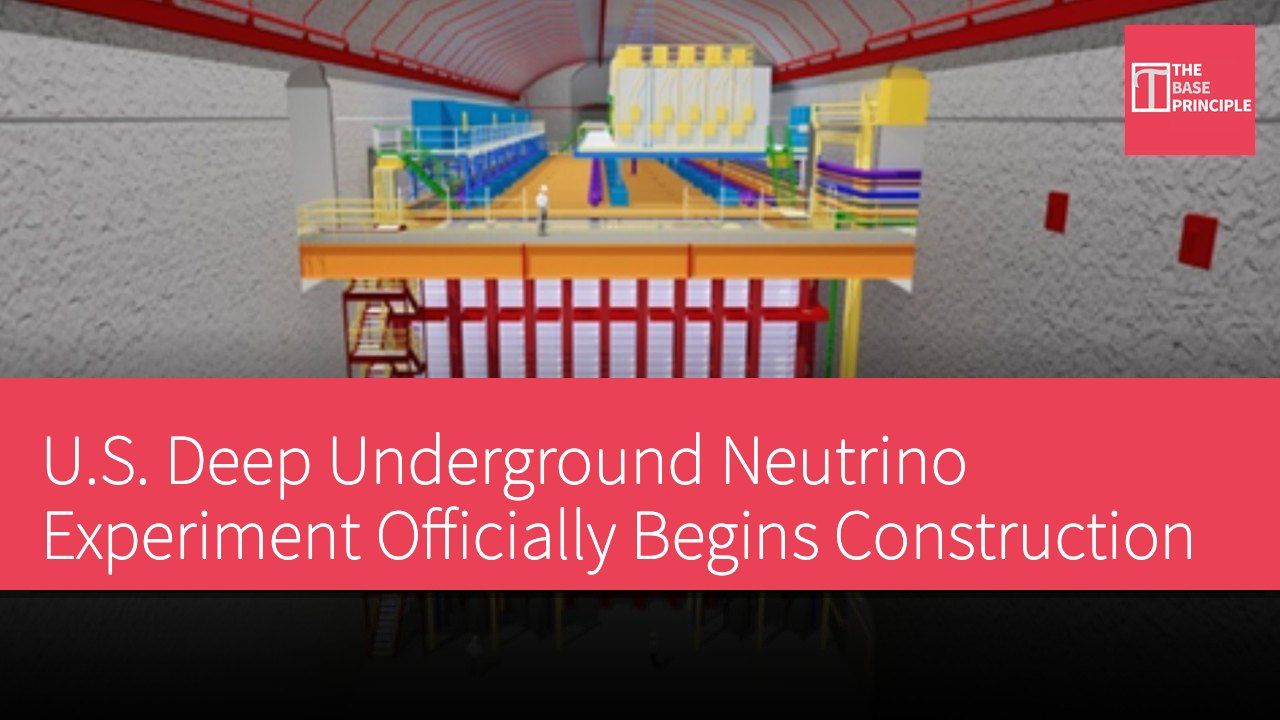
Another detector located at FermiLab will also take measurements before the neutrinos travel, collectively forming a long-baseline neutrino facility. A rendering of one of the cooling tank modules shows the design that will house the liquid argon detectors. Construction has already begun, with approximately 17,000 tons of liquid argon to be built. Each cooling tank will measure 216 feet (65.8 meters) long, 62 feet (18.9 meters) wide, and 60 feet (18.3 meters) high. A total of 2,600 steel beams will be used to construct the two cooling tanks; the 6,200 tons of material used to cast these beams comes from CERN's physical contributions.
CERN's Key Role
CERN plays a major role in the DUNE project, responsible for the design, construction, logistics planning, and installation of the cooling tanks. As a global leader in particle physics, the CERN team shares its expertise in cooling tank construction and has built ProtoDUNE, one of the two detector technologies that will be used for the experiment. This marks CERN's first significant contribution to a project outside Europe. “We not only provide technical expertise but also organizational project management capabilities for the project,” said Lluís Miralles, chief project engineer of the CERN Neutrino Platform, in a press release shared with Interesting Engineering.
“CERN demonstrates here how we have the internal capabilities to meet the project’s various requirements and challenges in design.”
SURF's Logistical Challenges
As the experiment is located underground, SURF has been tasked with shaft operations and logistics to transport steel beams and other equipment to the site 4,850 feet (1,478 meters) below ground. With the construction of the first cooling tank already underway, the SURF team has also begun building steel beams for the second cooling tank, with assembly expected to start next year. FermiLab's neutrino beam is anticipated to be sent to DUNE's underground detectors by 2031.
Item Specifications Cooling tank length 216 feet (65.8 meters) Cooling tank width 62 feet (18.9 meters) Cooling tank height 60 feet (18.3 meters) Liquid argon capacity 17,000 tons Number of steel beams 2,600 beams Weight of steel 6,200 tons
Scientific Value of the Deep Underground Neutrino Experiment
The Deep Underground Neutrino Experiment (DUNE) represents not only a significant advancement in particle physics but also contributes to explaining the differences between matter and antimatter in the universe. As one of the most mysterious particles in the universe, the study of neutrinos is crucial for understanding the fundamental structure of the cosmos. With the collaboration of CERN and other institutions, this project demonstrates the importance of international cooperation in scientific research and, through the application of cutting-edge technology, pushes the boundaries of physics. These studies will lay the groundwork for future scientific developments and may change our understanding of the universe.