
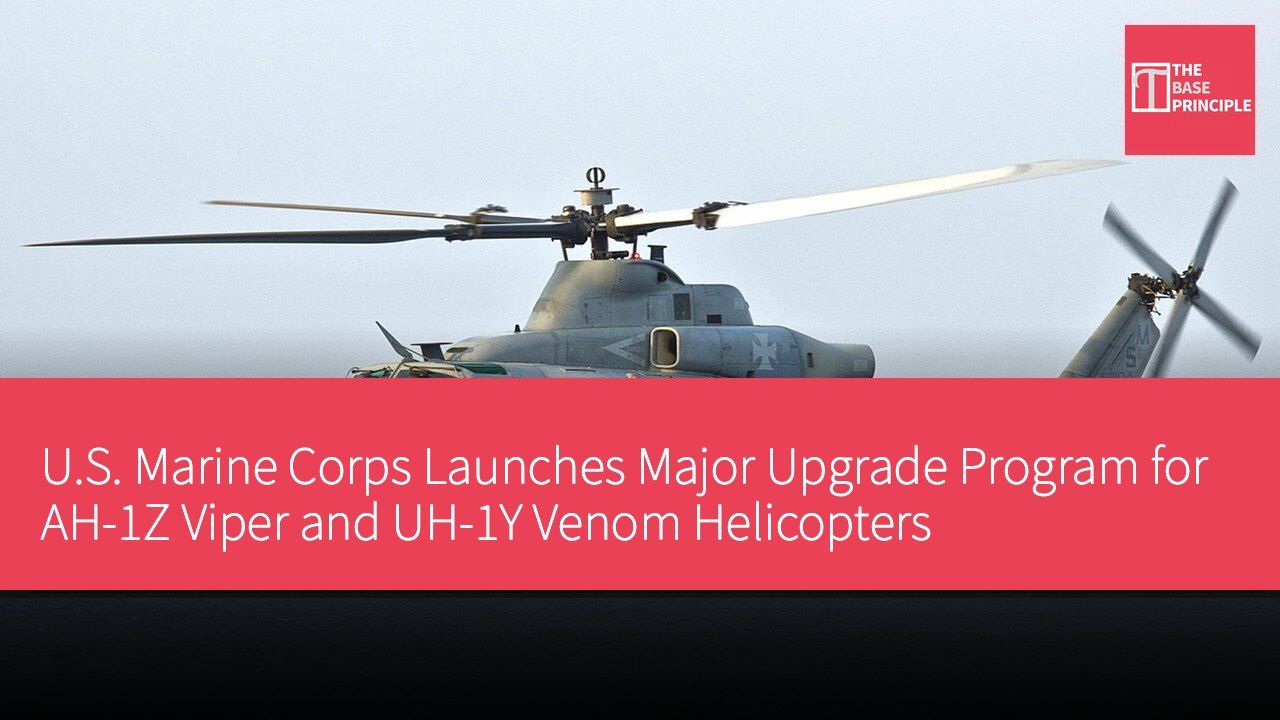
- The U.S. Marine Corps plans to significantly upgrade the AH-1Z and UH-1Y helicopters.
- The upgrades will enhance structural integrity and power to support heavier weapons and advanced systems.
- The upgrade program, named SPINE, is expected to begin retrofitting in the fiscal year 2027.
- The Marine Corps currently operates approximately 189 Viper and 160 Venom helicopters.
The U.S. Marine Corps is preparing to undertake a significant upgrade of its AH-1Z Viper attack helicopters and UH-1Y Venom multi-role helicopters, aimed at providing these aircraft with enhanced structural integrity and increased power to accommodate heavier weapons and advanced operational systems. This program, named SPINE (Structural and Power Improvement for Next Generation Effects), is expected to retrofit active aircraft in the fiscal year 2027 and has already completed developmental testing on two upgraded helicopters.
Main Objectives of the Upgrade
This upgrade addresses two critical limitations of the Marine Corps' H-1 helicopter fleet: structural load capacity and power generation capability. Strengthening the airframe will enable the aircraft to carry heavier loads, while increased power capacity will support additional weapons and mission equipment. A key new feature is the digital weapon bus, which will allow the aircraft's computer to exchange information with compatible weapons before launch. This capability is expected to facilitate the integration of advanced systems, including the cutting-edge AIM-9X missile, and streamline the introduction of future digital weapons.
The program office PMA-276 is utilizing flight test data from an upgraded AH-1Z and a UH-1Y to finalize the configuration before commencing retrofitting across the fleet. Developmental testing is currently being conducted at Naval Air Station Patuxent River in Maryland, involving PMA-276, Bell Textron, and the 21st Air Test and Evaluation Squadron. Bell completed the structural and power modifications on the two test aircraft in March 2026, a process that took 19 months and was carried out at the Amarillo Assembly Center in Texas.
Progress of the Upgrade Program
The project was previously known as the Structural Improvement and Power Upgrade (SIEPU). The company is currently preparing its Texas facility to handle the retrofitting of active helicopters, which includes procuring parts, establishing production lines, preparing specialized tools, and arranging for aircraft transport. The team is also coordinating SPINE with other planned H-1 upgrades to complete multiple retrofits during the same visit and reduce helicopter downtime.
The initial production work is supported by two U.S. Navy contracts. Bell received a $33.60 million contract in July for hardware related to Phase Three of SPINE, covering up to 49 aircraft, including 28 AH-1Z and 21 UH-1Y. Additionally, in October, the Navy opted for a further $114.70 million option, covering 15 aircraft equipment kits, four mission equipment kits, and installation for nine aircraft. This work is expected to be completed by June 2028.
The Marine Corps currently operates approximately 189 Viper and 160 Venom helicopters. Although production of the UH-1Y ended in 2020 and that of the AH-1Z concluded in 2022, these aircraft still share about 85% of their components, allowing them to benefit from common upgrades. This modernization comes as the Marine Corps explores new ways to integrate helicopters with drones. In May of this year, during an exercise in Twentynine Palms, California, Marine Light Attack Helicopter Squadron 169 utilized the UH-1Y Venom as an aerial control station for the Neros Archer first-person view drone.
One drone was launched from a helicopter in flight, while another was launched from the ground and taken over by the airborne team.
"The modernization of the H-1 is critical to maintaining a capable and ready force to support Marine Corps aviation ground task force crisis response," said Colonel Benjamin Carlton of PMA-276. He added that developmental testing continues ahead of the first operational retrofits in the fiscal year 2027, while engineers are refining the configuration to ensure the upgraded helicopters can be operational.
Item Specification Contract Amount (Phase Three) US$33.60 (approx. HK$261) million Contract Amount (Option) US$114.70 (approx. HK$895) million Active Aircraft Count 189 Viper and 160 Venom
Importance of the Marine Corps Helicopter Upgrade
The upgrade program for the AH-1Z and UH-1Y helicopters reflects the U.S. Marine Corps' commitment to enhancing operational capabilities. As modern battlefields increasingly demand advanced weapon systems and information technology, strengthening the helicopters' structural and power generation capabilities will enable these aircraft to integrate more advanced weapons and mission equipment. This not only enhances the operational efficiency of the helicopters but also improves the Marine Corps' flexibility and responsiveness in dynamic operational environments, making this upgrade particularly crucial in the context of the growing prevalence of drone technology.