
- The polyester made by bees can degrade in soil within months and has a structure similar to polyethylene.
- The weight of the polyester decreased from about 73% to approximately 40% over four months.
- The bees' polyester may contain cross-linking but still degrades quickly, challenging traditional beliefs.
- Researchers are exploring the role of esterases in polyester degradation, without disclosing specific testing conditions.
Researchers from Virginia Tech and the University of Tennessee have conducted a characterization analysis of a polyester similar to polyethylene, which bees use as packaging material to line their nests and can degrade in soil within months. According to reports from the Proceedings of the National Academy of Sciences (PNAS) and Virginia Tech, the crystalline structure of this polyester is similar to that of polyethylene, the primary material used in milk jugs and disposable food containers, but it contains ester bonds (chemical links that can be attacked by water and enzymes) in its chains. Virginia Tech notes that polyethylene can persist in the environment for hundreds of years, while most polyethylene-like polyesters have poor degradation performance.
Degradation Characteristics of Bee Polyester
Laura Russo, an ecologist at the University of Tennessee, stated that this bee-made polyester is different. In soil, the weight of the polyester decreased from about 73% to approximately 40% over four months.
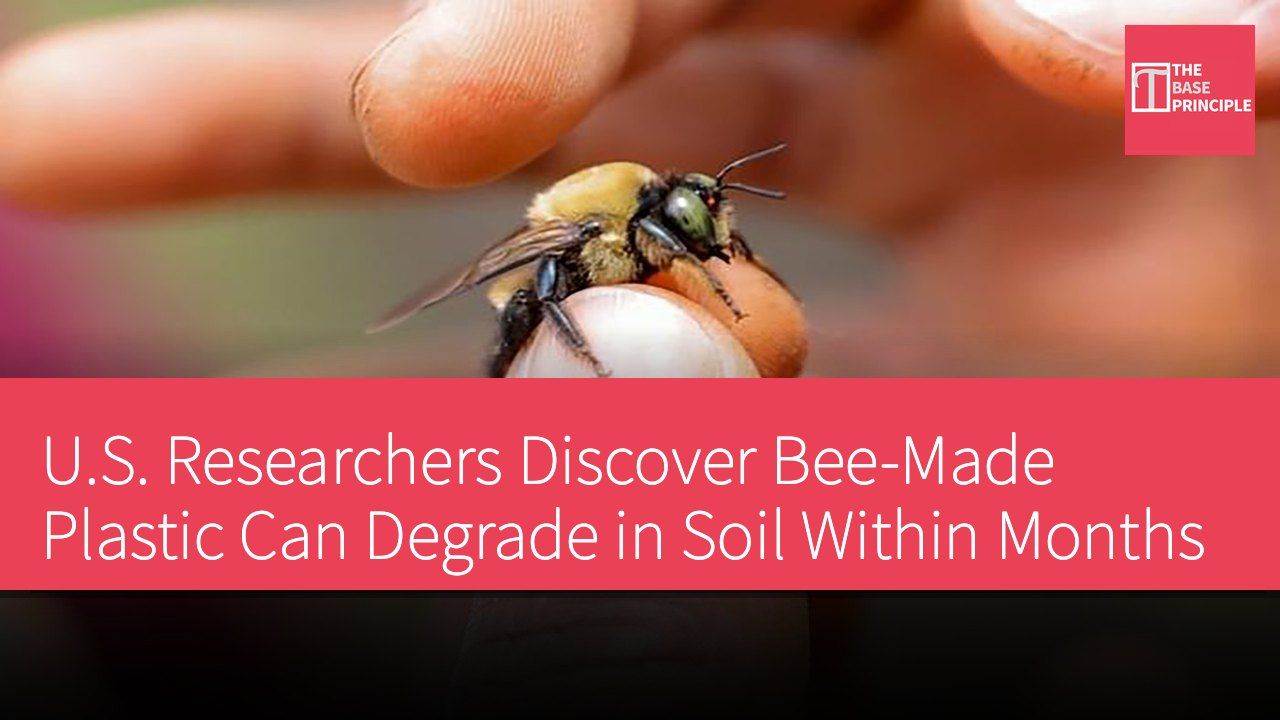
Jonathan Coote, an assistant professor at Virginia Tech and the lead author in the field of sustainable biomaterials, said, "This is a polyester that mimics polyethylene." This bee, the solitary ground-nesting species Colletes inaequalis, uses this polyester to line its nest. The team described the characteristics of the nest linings collected from two locations in Tennessee in their papers published in PNAS in 2023, 2024, and 2026. Virginia Tech noted that Chris Ellison and Frank Bates are co-authors.
Both universities described the material as semicrystalline, meaning it has ordered crystalline regions and disordered regions internally, possessing degradation temperatures and crystalline structures similar to polyethylene.
Virginia Tech indicated that this bee-made polyester may contain cross-linking, which are chemical bonds between adjacent chains that typically make plastics harder to degrade. Coote pointed out that traditional beliefs hold that such features would make degradation more difficult, but the bees' material does not follow this rule. According to Virginia Tech's report, polyethylene accounts for about one-third of global plastic production, with an annual output of approximately 160 million tons. The report also noted that many plastics marketed as biodegradable actually degrade slowly or only under industrial conditions.
Future Research Directions and Challenges
Virginia Tech stated that researchers are still exploring the chemical structures that enable the rapid degradation of bee polyester. The team speculates that a protein enzyme that cuts ester bonds—esterase—may help sever the chains. An independent study at the University of Konstanz found the presence of esterases in forest soil samples degrading various polyester bioplastics. The four-month data is based on the proportion of lining weight, and thus does not show the total material loss. The report from the University of Tennessee mentioned degradation over four months and one year but did not clarify the relationship between the two. Both universities did not disclose how many samples or specific soil conditions were tested.
The report did not provide evidence that the manufactured version could achieve the strength or commercial scale of polyethylene. It did not mention any funding sources or involve patents or conflicts of interest. Virginia Tech stated that the next step for the team is to fully understand the chemistry to replicate these useful features in manufactured materials.
Implications of Bee Polyester for Plastic Degradation
The polyester produced by bees demonstrates the potential for biodegradable materials present in nature, which is crucial for addressing plastic pollution. Traditional plastics like polyethylene have excessively long degradation times, significantly impacting the environment. The bees' polyester not only structurally mimics polyethylene but also degrades rapidly in soil, a discovery that could drive future research in biomaterials toward more sustainable directions. The researchers' exploration will aid in understanding the chemical properties of these natural materials and may promote the commercialization of new eco-friendly materials.