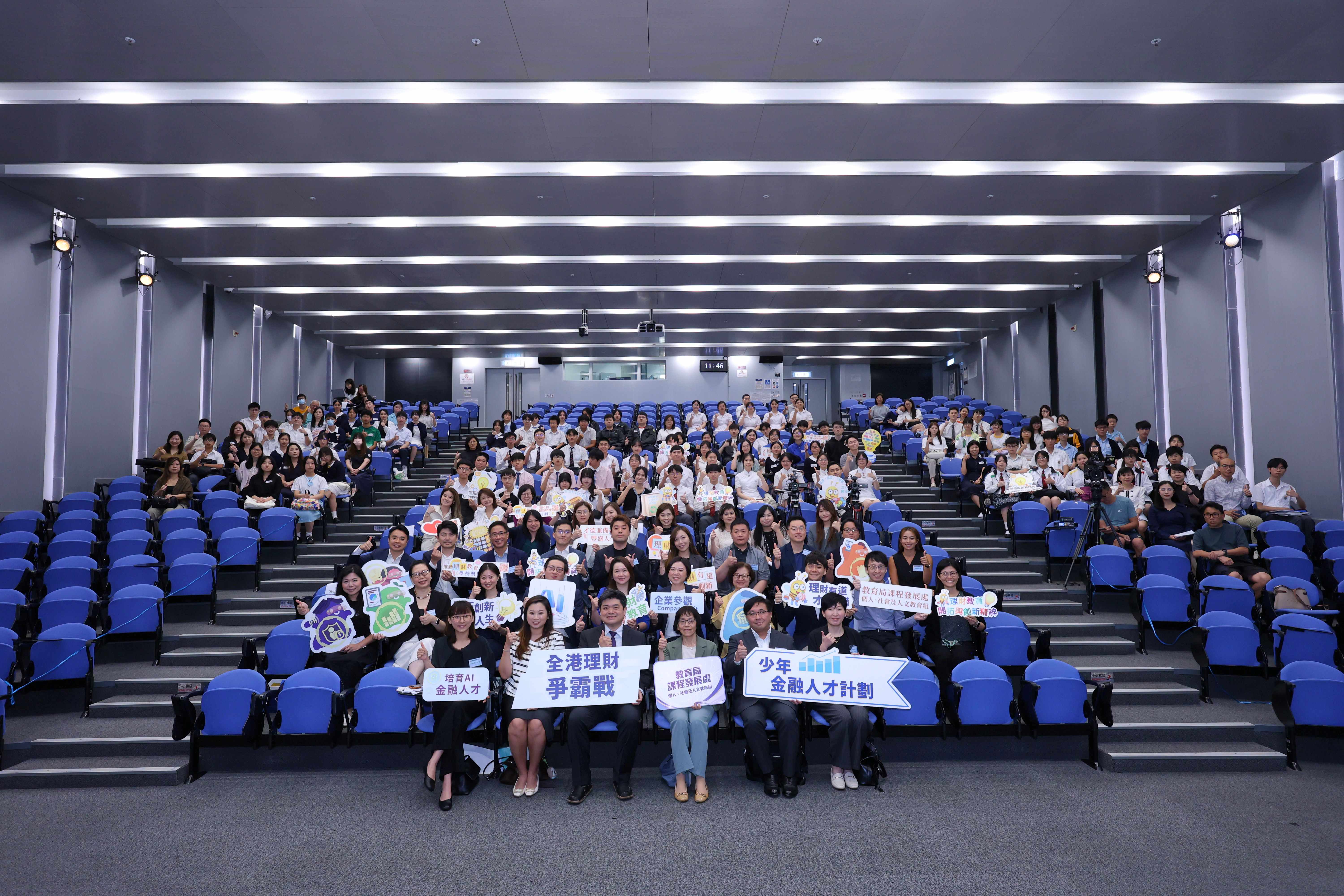
As the digital economy rapidly evolves, the importance of financial education becomes increasingly evident, particularly in the context of the growing prevalence of artificial intelligence (AI) and financial technology. In this context, Visa is fully supporting the "Hong Kong Financial Literacy Championship," aimed at enhancing students' financial literacy and encouraging them to design AI-driven innovative solutions. Visa's Managing Director for Hong Kong and Macau, Rami Shakra, shared his insights on financial education and its significance for future development during an interview.
The Future Trends of Financial Education
Rami Shakra pointed out that with the rapid development of AI and financial technology, future fintech trends will profoundly impact the financial literacy needs of the new generation. He emphasized that financial literacy is no longer just a basic skill for daily life but a crucial foundation for helping young people tackle future challenges and seize new opportunities. Visa hopes to assist the younger generation in preparing for the future by integrating financial education, innovative technology, and practical experiences.
The Success of the Hong Kong Financial Literacy Championship
In the "Hong Kong Financial Literacy Championship 2026," Visa's support led to a record number of participants, with over 46,000 submissions for the online quiz, attracting nearly 27,000 students and about 280 schools. Since its inception in 2014, the total number of online quiz submissions for the competition has exceeded 200,000, with the number of participating schools reaching 452, indicating a growing emphasis on financial education within the academic community. Shakra believes these results reflect an increasing interest among students in fintech and future business development.
The Importance of Practical Learning
The "Championship" not only assesses students' financial knowledge and practical application abilities but also values the innovation and feasibility of their proposals. During the competition, students can engage with real business environments through mentorship programs, training workshops, and company visits, allowing them to interact with professionals from various fields. Visa hopes that these activities will help young people connect classroom learning with the real world, inspiring them to apply innovative thinking to social and business challenges.
AI-Driven Financial Markets
When discussing AI-driven financial markets, Shakra stated that AI is transforming business and payment ecosystems at an unprecedented pace, reshaping consumer decision-making processes. Visa aims to support consumers, merchants, and partners in seizing new opportunities in an AI-driven business environment through secure, reliable, and seamless payment infrastructure. Visa will focus on developing Agentic Commerce, where AI agents search for information, compare products, and even complete shopping and payment processes on behalf of consumers, becoming part of their daily lives.

Market Potential in Hong Kong and the Greater Bay Area
Shakra holds an optimistic view regarding the development potential of Hong Kong and the Greater Bay Area in the fintech sector. He noted that Hong Kong, as an international financial center, possesses a robust financial and digital infrastructure, while the Greater Bay Area has significant cross-border business and capital flow demands, providing favorable conditions for fintech innovation. Visa will continue to collaborate with banks, fintech companies, and other partners to promote the development of innovative payment solutions and support more cross-border business application scenarios.
In summary, Visa is confident in the future development of financial education and fintech, and is committed to nurturing the next generation of financial talent through activities like the "Hong Kong Financial Literacy Championship," contributing to the digital economy's growth in Hong Kong and the Greater Bay Area. As Shakra stated, "Education should not be limited to the classroom or theoretical level, but should serve as an important foundation for helping young people tackle future challenges."