
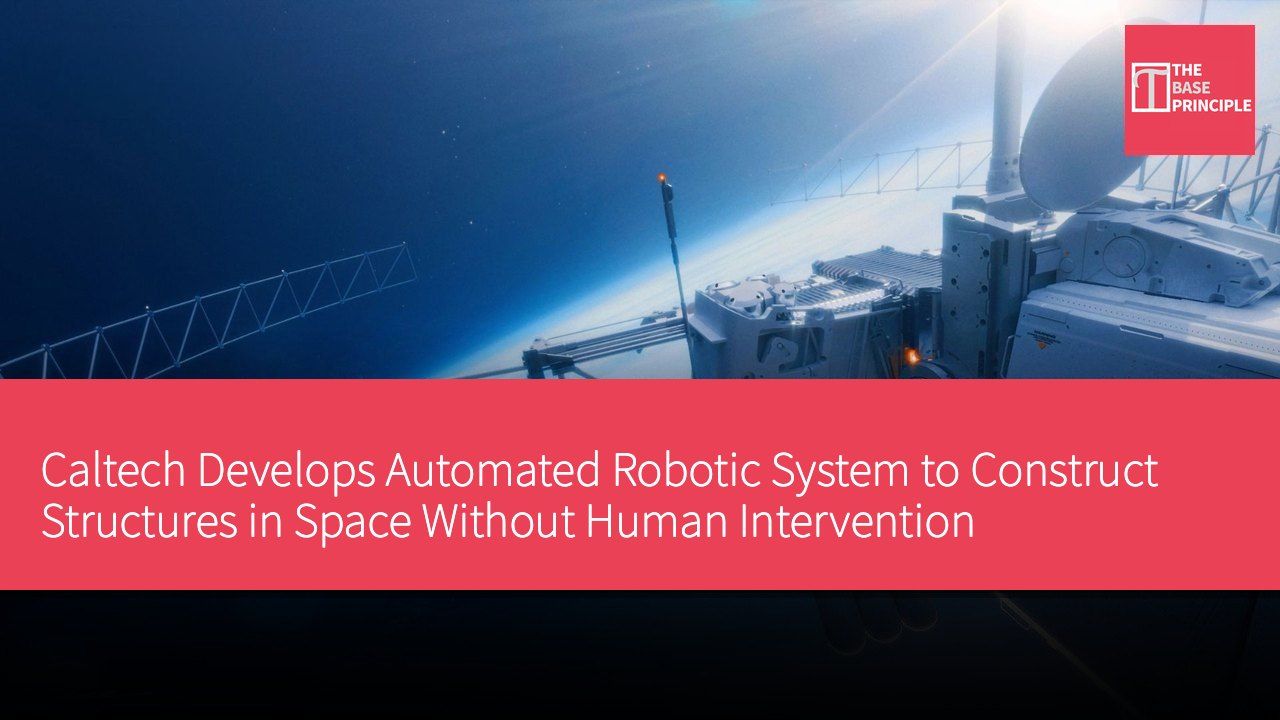
- The robotic system developed by Caltech can autonomously construct structures in space without human intervention.
- The ASTRA system is capable of assembling truss structures in low Earth orbit and has successfully completed the assembly of a third region.
- This technology utilizes lightweight reflective materials, potentially aiding in the construction of lighter space structures.
- Future applications include large space telescopes and communication infrastructure, exceeding the transport capabilities of traditional spacecraft.
Researchers at Caltech have successfully developed a robotic system capable of autonomously constructing structures in space without human intervention. This automated truss builder uses robotic manipulators to collect structural supports and joints from nearby dispensers and assembles them into identical parts. The technology was developed as part of the U.S. Defense Advanced Research Projects Agency (DARPA) Novel Orbital and Lunar Manufacturing, Materials, and Mass Efficiency Design (NOM4D) program. According to the team, this demonstration marks a significant advancement in enabling robots to autonomously construct large space structures without the need for astronaut assistance.
Assembly Capabilities of the ASTRA System
This robotic system is capable of assembling structures in space without direct assistance from astronauts. The automated builder constructed a portion of a truss structure in low Earth orbit, marking the first demonstration of such technology. The technology, named the Automated Space Tension Reflector Assembly system (ASTRA), uses robotic manipulators to collect structural components from dispensers inside the cabin and repeatedly assembles truss sections called regions. Its components include composite fiber tubes, aluminum alloy joints, and reflective surfaces made from perforated Kapton film. The system is designed to construct a reflector antenna with a diameter of 1.4 meters (approximately 4.6 feet).
Although the demonstration did not complete the entire antenna, the successful assembly of the third truss region proved the feasibility of the autonomous construction method.
ASTRA combines robotic arms, electric component dispensers, assembly boards, and an onboard computer approximately the size of 1 cubic meter (about 35 cubic feet). The payload was launched from Vandenberg Space Force Base on March 30, 2026, aboard Momentus Inc.'s Vigoride 7 orbital vehicle. The vehicle carried ASTRA as one of ten payloads during SpaceX's Transporter-16 mission.
Before launch, the system contained two pre-assembled truss regions and the components needed to construct additional parts. After entering orbit, ground control instructed the onboard computer to release launch constraints and deploy the two existing regions. Subsequently, the robotic manipulators began assembling the third region, retrieving individual supports and joints from nearby dispensers, placing them on the assembly board, and connecting them to form the desired structural part.
Challenges and Solutions in Space Operations
After completing the assembly of one region, the system attached a mesh reflective film to the truss. The design utilized two reflective cable nets that counteract each other through spring pre-tensioning. Once ready, the completed section is pushed outward into space, allowing the manipulators to repeat the construction sequence. The planned configuration of ASTRA connects 11 regions to the reflective surface. A key feature of this technology is its lightweight reflective materials, developed collaboratively by researchers at Caltech and partners at the University of Pennsylvania. Compared to the metal mesh materials used in traditional deployable reflectors, this perforated film requires less pre-tensioning, which may help engineers construct lighter structures while maintaining the necessary reflective surface.
Operating the system in space presented challenges not encountered during testing in Earth laboratories. The team had to repeatedly adjust commands and utilize images transmitted from the spacecraft to troubleshoot unexpected issues. Communication opportunities were limited to about seven to eight windows per day, each lasting approximately 15 minutes. As a result, researchers tested the flight backup components of ASTRA in Caltech's Pellegrino laboratory to identify potential solutions before sending revised commands to the orbital system. This project is the third phase of the DARPA NOM4D program.
In the first two phases, researchers developed assembly concepts and demonstrated their operation under laboratory conditions. The program aims to enable structures capable of being built hundreds of meters or even kilometers in size. Current space structures are limited by the size of rocket launchers, requiring engineers to fold components for deployment or assemble parts through multiple launches. Autonomous orbital manufacturing could provide an alternative method for assembling structural components directly in space.
Future Application Potential
Although ASTRA did not complete its planned reflector before the demonstration's December mission deadline, the results provide a starting point for refining the technology. Future applications may include large space telescopes, radio frequency antennas, communication infrastructure, and solar arrays for collecting energy in orbit. These structures could ultimately exceed the system sizes that can be transported or deployed using traditional spacecraft.
Impact of the ASTRA System on Space Construction
The successful demonstration of the ASTRA system marks a significant advancement in space construction technology, with autonomous construction methods that do not require human intervention set to change the way future space missions are executed. This technology not only has the potential to enhance construction efficiency but also allows structural sizes to surpass the transport limitations of traditional spacecraft, paving the way for the construction of large space facilities. As the technology continues to develop, more complex space infrastructure may be realized, facilitating advancements in deep space exploration and scientific research.