
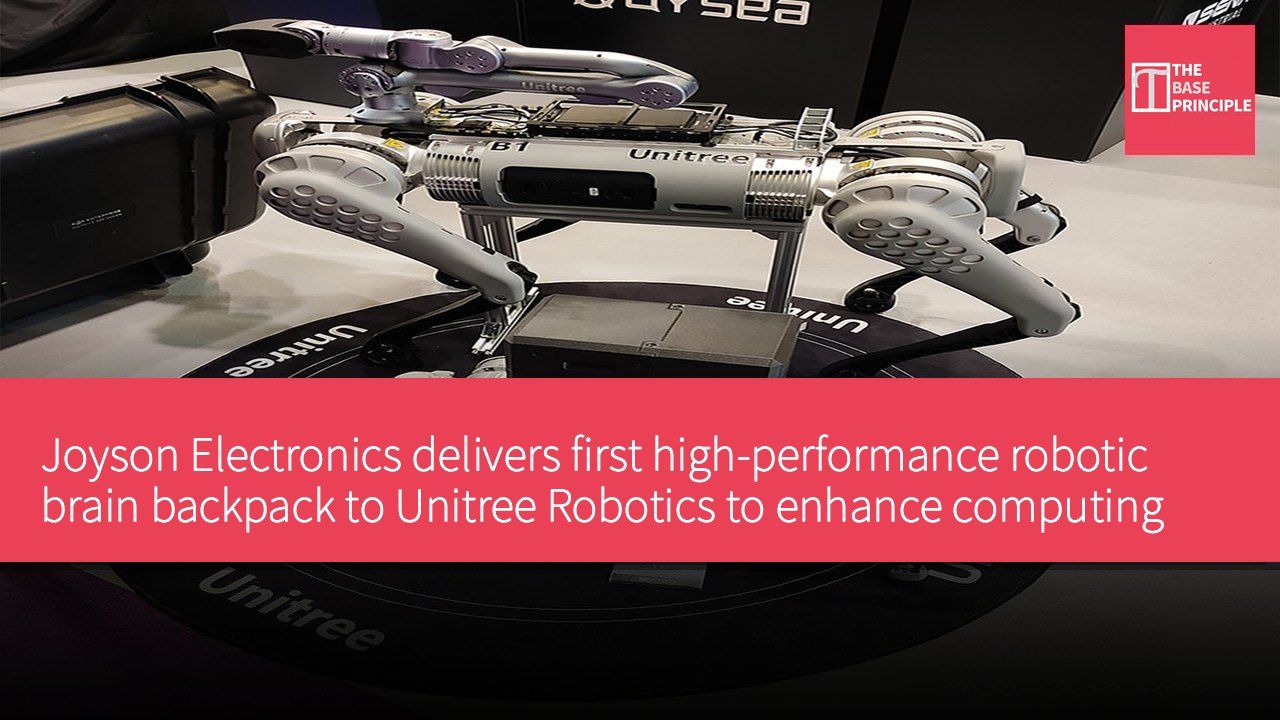
- Joyson Electronics delivers its first high-performance robotic brain backpack to Unitree Robotics.
- The backpack is designed to enhance the robot's computing capabilities for perception and motion control tasks.
- The backpack integrates an edge computing platform, supporting local inference and autonomous decision-making.
- The robotics industry is transitioning from the testing phase to large-scale commercial deployment.
Chinese automotive parts supplier Joyson Electronics announced the delivery of its first high-performance robotic brain backpack to Unitree Robotics on November 10. According to a release from PR Newswire, the backpack is an additional computing module aimed at providing robots with enhanced processing power to perform tasks such as perception and motion control. Joyson stated that this handover marks the transition of its collaboration with Unitree into the product deployment phase.
Joint Development of New Technologies
According to reports, the two companies established a strategic partnership this year to jointly develop the backpack, dexterous hands, and energy management systems for solid-state batteries, which utilize solid electrolytes instead of liquid ones. The clear goal is to develop standardized components that can be mass-produced and applicable to various types of robots.
Joyson stated that the backpack integrates an edge computing platform, meaning that the computer runs artificial intelligence on the robot rather than in a remote data center. This unit can work in conjunction with Unitree's humanoid, quadrupedal, and wheeled robots. According to Joyson, the backpack is referred to as the core carrier of its embodied intelligent brain, which is a hardware and software package for robots to operate in the physical world. Reports indicate that the backpack can function as an independent external module for environmental perception, data collection, autonomous decision-making, and dynamic motion control.
Technical Advantages of the Backpack
The company also stated that the backpack supports real-time inference on the device, meaning that trained artificial intelligence models can make decisions locally and improve energy management, significantly extending operational time.
Reports indicate that limited training data, insufficient onboard computing power, and perception accuracy constraints are challenges faced by physical artificial intelligence, which refers to AI operating in the real world. The reports did not provide specific data on computing power, battery capacity, or operational time. Unitree has already sold humanoid robots such as the H2-X, while its H2 is built around an NVIDIA research system based on the Jetson AGX Thor computer. Joyson's report did not mention any chips or specify which Unitree models received the first unit.
The report only included a statement from Joyson and did not cite any statements from Unitree or include named executives. Claims regarding performance, including longer operational times, are subjective statements from the company and lack supporting test data. The report mentioned "the first" but did not disclose how many units were delivered or when mass production would begin. Joyson also described its work in automotive parts and smart manufacturing, including pilot deployments on production lines. Key areas of focus include data collection, integration of hardware and software, and training industrial foundation models, which are large AI models trained on factory data.
The goal is to develop standardized robotic solutions that can be replicated across various industries.
Reports indicate that the robotics industry is transitioning from the testing phase to large-scale commercial deployment, which is Joyson's perspective rather than a measured trend. Other robotics manufacturers, such as Xpeng's IRON humanoid robot, are also exploring solid-state battery technology. Joyson anticipates further progress in joint component development later this year. The report is dated November 11.
Commercialization Trends in Robotics Technology
The collaboration between Joyson Electronics and Unitree Robotics marks an important step in the commercialization of robotics technology. With the launch of the high-performance robotic brain backpack, not only is the computing capability of robots enhanced, but they can also make autonomous decisions more effectively in practical applications. This development reflects the robotics industry's gradual shift from experimental phases to commercial applications, indicating an increasing market demand for automation and intelligent solutions. In the future, as technology matures further, robotic solutions are expected to see widespread application across various industries.