
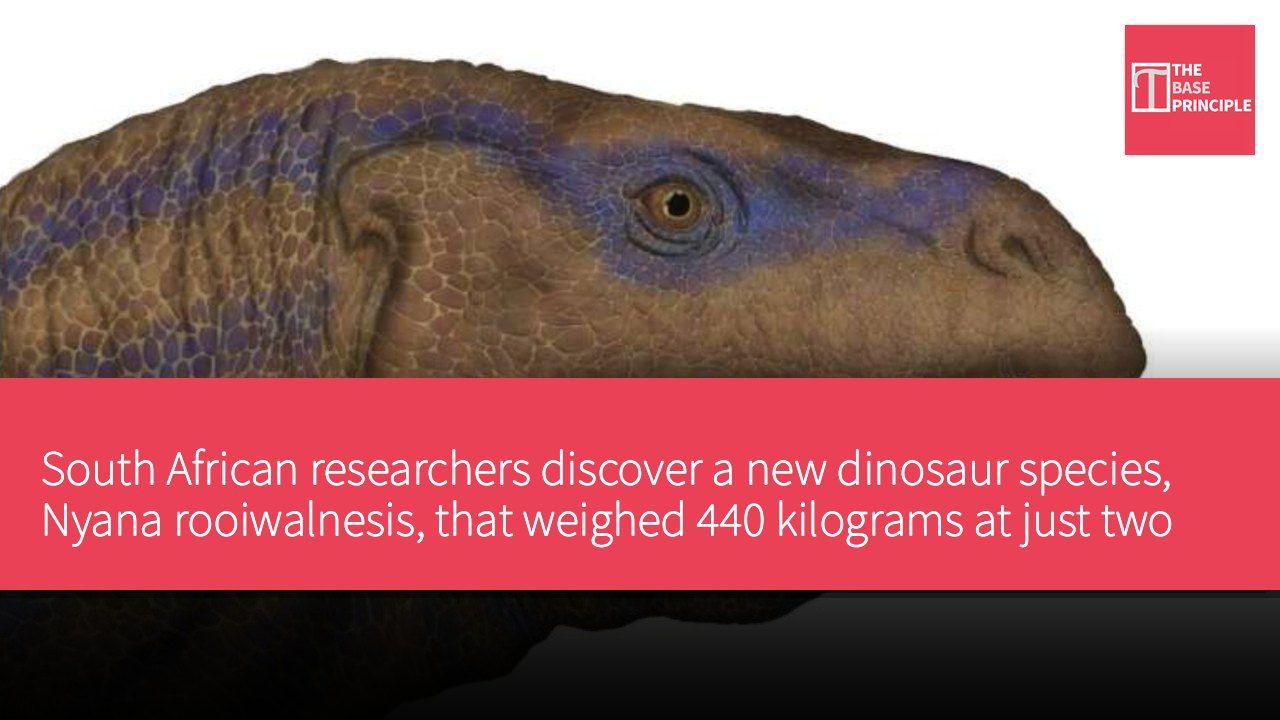
- Nyana rooiwalnesis is a newly discovered dinosaur species that lived nearly 200 million years ago.
- This dinosaur weighed approximately 440 kilograms at the age of two and belongs to the sauropod group.
- The research team created a 3D model of Nyana using X-ray technology.
- The discovery of Nyana provides new insights into the evolution of early dinosaurs.
A research team from the University of the Witwatersrand in South Africa has identified a new dinosaur species that lived nearly 200 million years ago in what is now South Africa. This dinosaur, named Nyana rooiwalnesis, weighed 880 pounds (approximately 440 kilograms) but was only two years old. Nyana belongs to the group of dinosaurs known as sauropods, which walked on two legs and primarily fed on plants. These long-necked and long-tailed dinosaurs eventually evolved into the Brachiosaurus and Apatosaurus, becoming the largest terrestrial animals on Earth. They first appeared around 230 million years ago and persisted until the late Cretaceous period, approximately 66 million years ago, spreading across all continents.
Due to their large size, complete fossil records are difficult to find, as fossilization requires the burial of the entire organism, which is why smaller fossils can be discovered across various continents. The fossils discovered date back to the late Triassic period when these early dinosaurs were still evolving.
Challenges in Fossil Discovery
Researchers analyzed a fossilized skull, which is a rare find for this age and location in southern Africa. The fossil was discovered in 2018 on the outskirts of Qhemegha village in the Eastern Cape province. The incomplete skull remains found were sufficient to generate a detailed 3D model. The skull measures 8.4 inches (approximately 21.3 centimeters) in length and includes nearly complete cranial bones, the upper jaw, and the hyoid bone, a small bone in the throat. The research team at the University of the Witwatersrand utilized powerful X-ray technology from the European Synchrotron facility to create the model and determine Nyana's position on the dinosaur family tree based on its characteristics.
The team also used slices taken from limb bones to estimate Nyana's age and growth patterns. These slices revealed growth rings similar to tree rings and showed two growth lines. This indicates that Nyana was in its third year of life. Although it had already grown to a considerable size, it was still growing at the time of its death and would have continued to grow to reach a multi-ton weight.
Growth Patterns of Nyana
Nyana's size is approximately four times that of its contemporaries, Massospondylus and Mussaurus, making it one of the largest juvenile dinosaurs of its time. While the discovery of this new dinosaur has garnered attention, the findings also provide new insights into the evolution of early dinosaurs during this period. Researchers noted that rapid growth occurred in the evolutionary process of sauropods before the emergence of true giant dinosaurs. Phylogenetic analysis suggests that Nyana may be closely related to Sarahsaurus from North America or Ngwevu from South Africa.
If Nyana is a sister taxon to Sarahsaurus, it would provide paleontologists with biogeographical connections between sauropods in southern Africa and those in northwestern North America. The findings have been published in the journal Royal Society Open Science.
The Significance of Nyana's Discovery in Dinosaur Evolution
The discovery of Nyana rooiwalnesis not only enriches the diversity of dinosaur species but also reveals growth patterns of early sauropods. The dinosaur's massive size at such a young age contrasts sharply with its age, indicating that features of rapid growth may have existed before the emergence of true giant dinosaurs in the evolutionary process of sauropods. This discovery aids in understanding the biogeographical connections between dinosaurs in southern Africa and North America, providing paleontologists with further opportunities to study the evolution of early dinosaurs.