
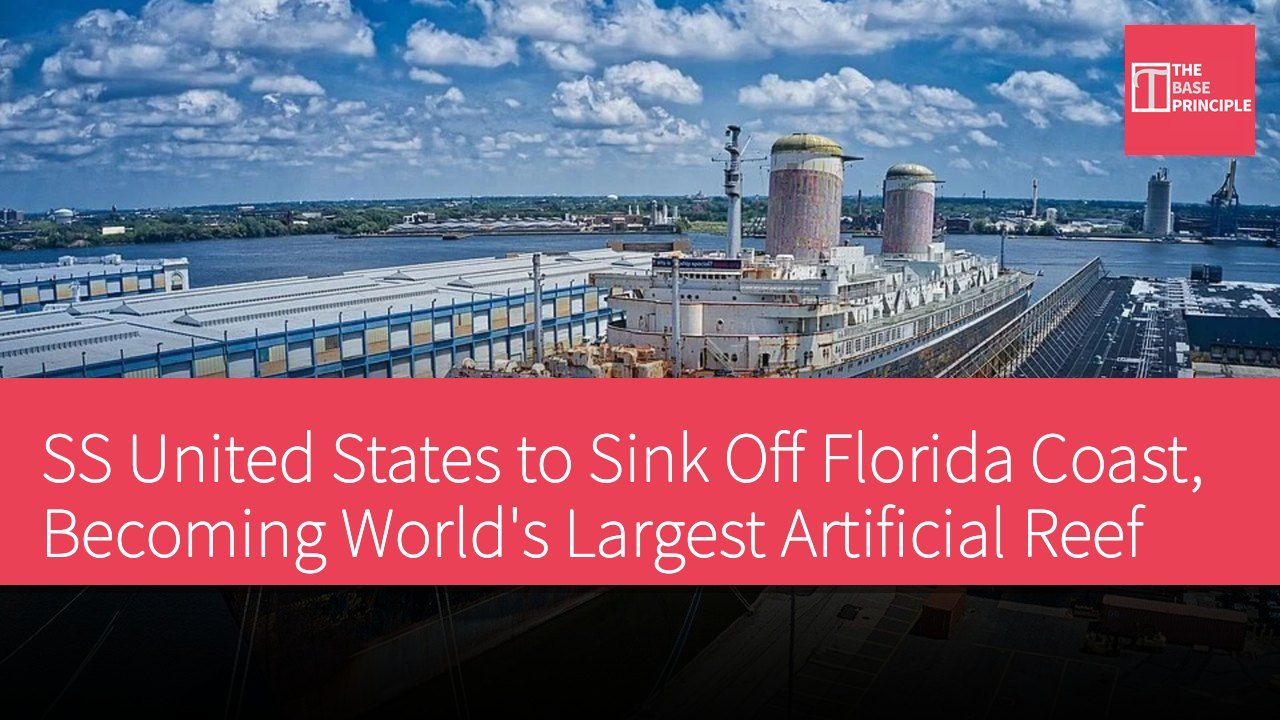
- SS United States will sink off the Florida coast, becoming an artificial reef.
- The liner broke transatlantic speed records in 1952 and measures 990 feet long.
- The sinking plan aims to attract divers and boost the local economy.
- Environmental groups express concerns about potential pollution from the vessel, but the plan complies with EPA regulations.
An ocean liner is set to embark on its final, most improbable journey: a direct descent into the Gulf of Mexico. Okaloosa County officials announced this week that the historic SS United States is expected to sink off the Florida coast in the second week of November, with the exact timing dependent on weather conditions. The vessel, which once raced across the Atlantic, is about to become stationary, providing a vast new home for marine life. The ship will settle on the seabed approximately 22 nautical miles (41 kilometers) southwest of Destin, becoming "the largest artificial reef in the world": an underwater metropolis for marine organisms.
Okaloosa County officials stated in a press release, "This is an exciting development aimed at creating a unique resource for the environment and our tourism industry."
History and Achievements of SS United States
County leaders anticipate that this new attraction will draw divers and charter fleets from around the world, generating millions of dollars annually for local dive shops, charter fishing businesses, and hotels. The ship's second spectacular debut stems from its speed and the ambitious spirit of mid-20th century America. Launched in 1952, the nearly 990-foot ocean liner broke transatlantic speed records on its maiden voyage, crossing the Atlantic in just three days, ten hours, and forty minutes. This feat was about 10 hours faster than the previous record held by the Queen Mary.
The vessel earned the Blue Riband for the fastest transatlantic passenger service, a title it still holds according to Atlas Obscura. Reports indicate that the cost to build SS United States ranged from $70 million to $79.4 million. The U.S. government provided $50 million in funding to support the ship's construction.
Environmental Considerations of the Sinking Plan
However, changing tourism habits over the decades left the ship docked, rusting, and facing an uncertain future. The vessel was retired in 1969 after 17 years of service and changed hands among several owners, deteriorating over time. A rental dispute with the owner of the Philadelphia dock ultimately forced the SS United States Conservancy to sell the ship. Okaloosa County purchased the vessel for $1 million and plans to tow it from Philadelphia to Mobile, Alabama, on February 19, 2025.
Conservationists have fought for years to restore the grand liner, but astronomical maintenance costs ultimately dashed those ambitions.
Now, its fate lies beneath the sea. Environmental groups and scientists have expressed concerns about the vessel's zinc chromate paint potentially polluting the Gulf of Mexico; however, Okaloosa County has confirmed that the project complies with EPA regulations. A federal lawsuit attempting to halt the sinking was dismissed in August 2025. County officials have described this initiative as an exciting advancement for local tourism and environmental development. The ship, measuring 990 feet, will surpass the USS Oriskany, which has held the title of the largest artificial reef since sinking in Pensacola in 2006 at 888 feet.
Supporters expect that the rusting hull will transform into a thriving coral reef ecosystem for divers and local marine life. SS United States will become a jewel among the more than 500 existing artificial reef networks in the region and a brilliant gem for diving along the Gulf Coast.
Impact of the Sinking Plan on the Local Economy
The sinking plan for SS United States is not only a tribute to history but also helps promote the development of local tourism. It is expected to attract a large number of divers, generating significant revenue for local dive shops and hotels. While environmental groups have expressed concerns about potential pollution, local officials emphasize that the plan meets environmental standards, demonstrating how historical resources can be leveraged to foster economic growth while protecting the environment. The success of this plan will serve as a reference model for similar projects in other regions.